Staples

map template.jpg

Staples Church of England Section 5 row 1 Plot 28

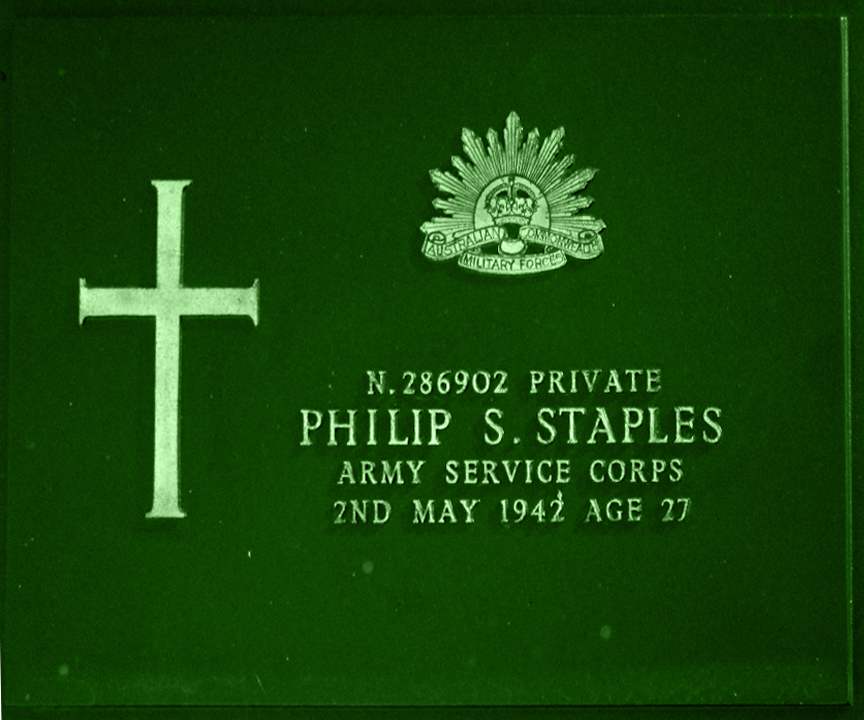
Charles Jefferis Staples (ashes) shares the grave with Phillip Staples aged 27 died 1942, and wife Florence Millicent Staples (ashes).

phillip.jpg

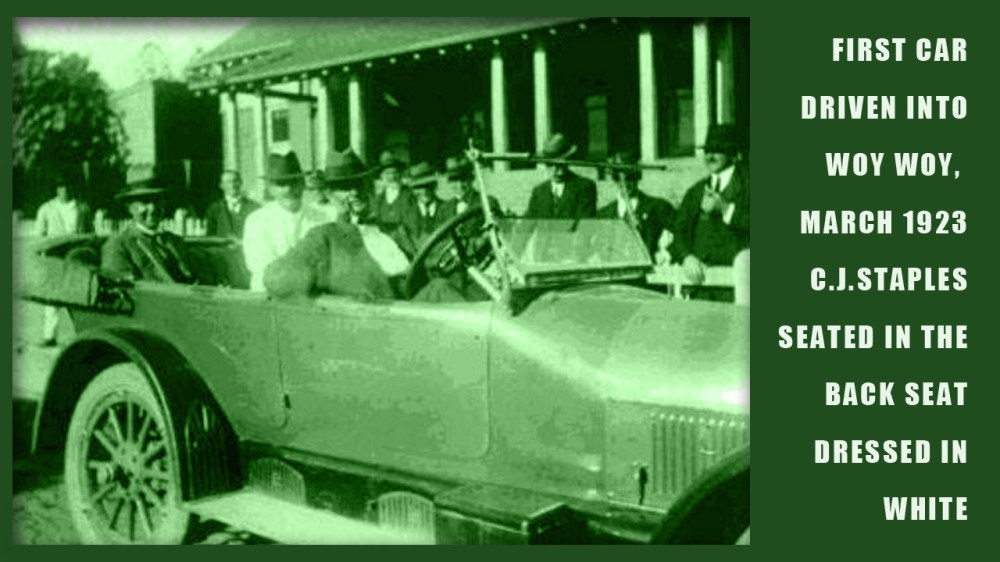
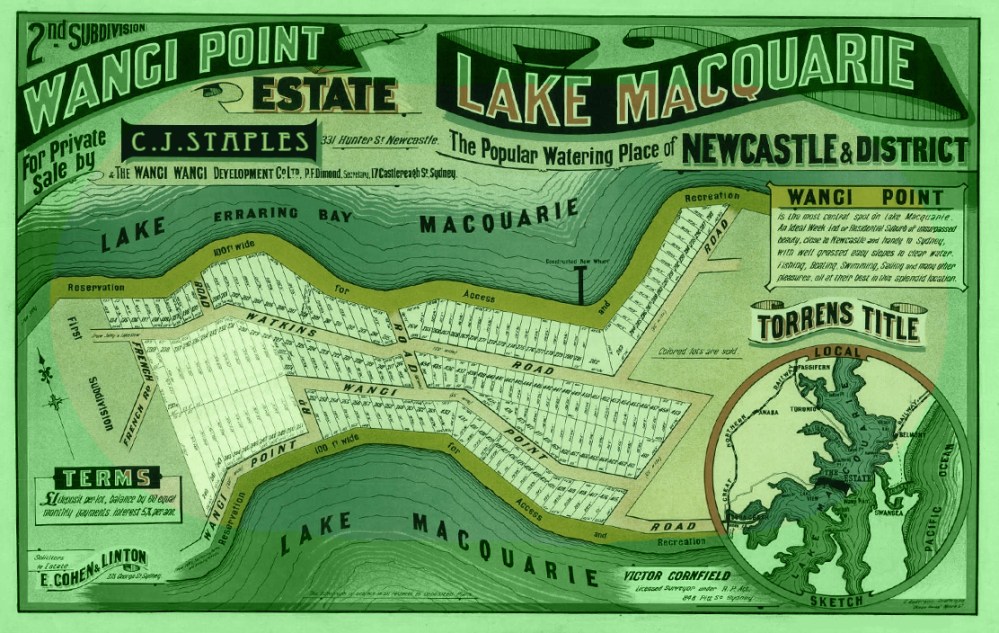
C J Staples died in 1973 aged 88, and he lived a very full life. Born in 1885 he spent the first decades of his life as a real estate speculator working with his father sub dividing various parts of what are now well known suburbs of Sydney. His real Estate business was on the corner of Blackwall Rd and Railways street Woy Woy.

house

The first mentions of him in the local newspaper are in the early 1920’s he was a good mate of Robert James Baker, Proprietor of the local paper, (see previous posts). He was a part of the “Baker Team” on council and clearly learnt about the power of the press from Baker as he has 100’s of articles and snippets written of him and his exploits.

He kept close ties with the press and kept the journalists informed well after the death of Baker in 1925. He held the Editorship of the Gosford and Wyong Times for a short period.

He was a keen marker outer of roads, He had plans about how the Woy Woy Peninsula would be accessed by road, coupled with his team of V.J. Mackenzie and Charles Fenton the Council Engineer (up until 1927 when Fenton died).

CAR

He is best remembered these days as the name of a lookout as to drive along Woy Woy Road.  This is the only place in the district that he is commemorated.

bwd

One has to remember that Gosford and the Brisbane water district started out as a waterside townships and was very reliant on boats for travelling about to Sydney and beyond. With the avent of motorised vehicles there was added pressure to develop link roads from Sydney to Newcastle and for roads to swing by Gosford and other towns on the way. Many of the roads to the Central Coast we take for granted and use today did not exist until the 1920’s.

In the below link to Trove newspapers, Staples is fighting for a road to join to the Newcastle Road via Patonga and Mullet Creek. This road did not eventuate.

https://trove.nla.gov.au/newspaper/article/166836857?searchTerm=ANOTHER%20MOTION%20BY%20CR.%20STAPLES%20DEFEATED.%20%20%20%20%20%20%20%20%20%20%20%20&searchLimits=l-title=689|||sortby=dateAsc|||l-category=Article

The next link to Trove newspapers Staples is finding a route from Gosford to the Newcastle Rd this road did eventuate.

https://trove.nla.gov.au/newspaper/result?l-title=689&sortby=dateAsc&l-category=Article&q=Mooney+Route+Inspected

division map

When plans for an appropriate World War 1 Memorial were underway Staple put forth for a Memorial District Hospital, but got voted down for the Gosford Swimming pool and cenotaph. He continued to pursue the development of a hospital and it finally came to pass.

sub 2

He became the district Coroner after the retirement of William Kirkness (who was 75 years of by that time) and his first case was a murder suicide at Ourimbah, this incident became known as the “Ourimbah Tragedy” and here is the newspaper accounts of that incident. This incident became national headlines but strangely was not reported at all locally.

24th June 1937

Western Mail (Perth W.A.)

FAMILY WIPED OUT.

BODIES FOUND IN HOUSE

Theory of Murder and Suicide

SYDNEY, June 20.-A ghastly discovery was made in a small home on an orchard property at Ourimbah Creek, 13 miles from Gosford, this afternoon when a family of four was found dead. A woman and her two sons had their heads battered ia with an axe and their throats Were cut. The woman’s husband was lying dead in the kitchen with his throat cut.

The victims were:

HUMPHRIES, Leslie Hugh (43), temporary linesman.

HUMPHRIES, Martha Amelia (37), his wife.

HUMPHRIES, Owen Leslie (7).

HUMPHRIES, Clarence William (S).

When police and ambulance men from Gosford entered the house, they state, it resembled a shambles. The police are of the opinion that Humphries became suddenly demented, probably through financial worries, and smashed in the heads of his wife and two sons, then cutting their throats with a razor and before he killed himself with the razor.

It is believed that the tragedy occurred early this afternoon. When Miss Z. Lang, daughter of the postmaster at Palmdale, was cycling along the road to her home, she saw Humphries gesticulating wildly as he rushed about. When he saw Miss Lang, he shouted to her: “Will you call the sergeant. I have done it.”

Miss Lang hurried to her father and he, with two men, went to the home of Humphries. They were met with a ghastly sight The body of Mrs. Humphries was lying in the kitchen covered with a blanket and near her was the body of her husband. He apparently had been dead only a few minutes. The head of Mrs. Humphries was shockingly injured.

Soon afterwards, Sergeant Blackley and the Gosford ambulance arrived and in the bedroom they discovered the bodies of the two boys lying on a bed with their heads smashed in and then throats gashed so extensively that they appeared to have been almost decapitated.

Not all the cases were as dramatic as the Ourimbah Tragedy, he over saw many vehicle related deaths be they pedestrians, passengers or drivers many of these deaths were on the very roads he had marked out the decade before.

Staples observed that by 1937 vehicles had became faster by the year and that the grade of the hills and the number of curves and corners had remained the same, not changing with the speed of the vehicle speed leading to the increase of fatalities on the Central Coast roads.

He also noted that the Central Coast was approximately equidistant from both Sydney and Newcastle and was in what he called the sleep zone with many drivers dying asleep at the wheel. He dealt with x10 road fatalities in his first year.

He was a strong advocate for warning signage and speed limits and driving to the conditions.

Florence his wife was an active member of the CWA.

Staples only son Phillip, was a radio technician/repairman whilst in Gosford and one can not help but think he would have applied those skill when he join the armed forces during world War 2. The Australian War Memorial has not as yet digitised his war record but he died during that conflict in 1942. The Local newspapers did not report that death either.


Edith Gell

Edith Gell Church of England Section 9 Row 1 Plot 2map template

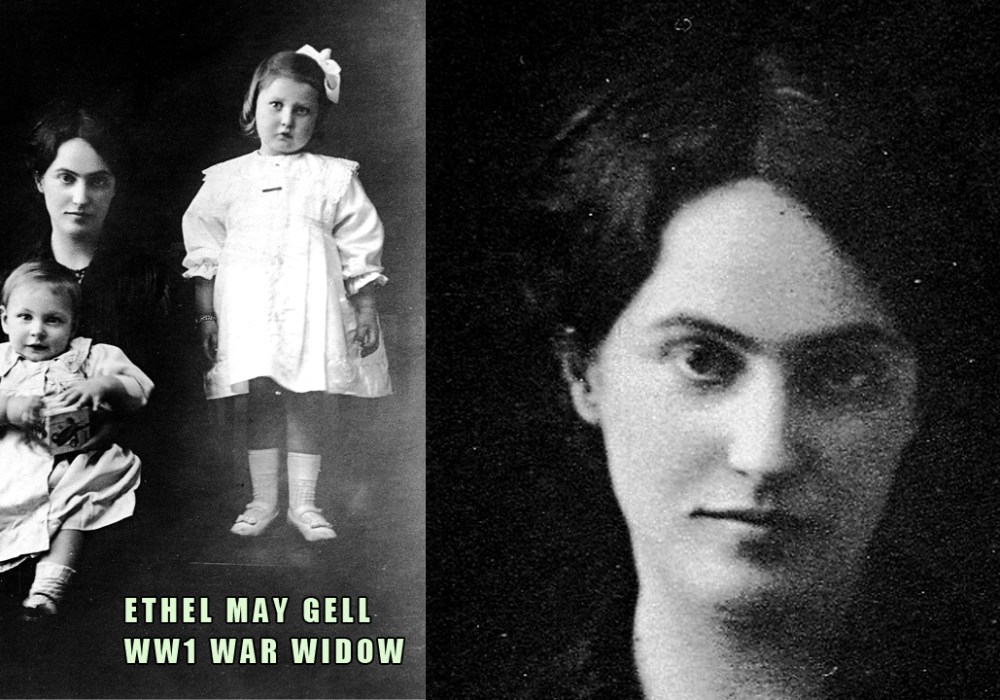
Frank Gell joined the AIF in March 1916, he was 6 foot tall and 26 years of age. He was sent to the front in January 1917 and was killed in action By May 1917. Edel Gell, known as Edith was his widow.

Frank Gell’s war record
https://recordsearch.naa.gov.au/SearchNRetrieve/Interface/ViewImage.aspx?B=4104373

Thu 15 Aug 1918 –

The Gosford Times and Wyong District Advocate

SOLDIER’S COTTAGE

Handed Over by Of fellows.

On Saturday afternoon last, in the presence of a very large gathering, the handing over ceremony was performed by the District Order of the I O O F.

The cottage erected by that Society for the widow and orphans of the late Private F. Gell,

who was killed in action in France last year. Since the outbreak of the War the Manchester Unity Oddfellows.

Of which the deceased soldier was a member the established a Fund for the purpose of assisting disabled members and their dependents, and Saturday’s function was a striking example of the practical work being done by the Society in this direction.

The local Branch of the Order has also given valuable assistance, with the organising of the entertainment for this event, given by “The Merrymakers”.

Mr. F. A. Stayner, Superintendent of the Boy’s Home, occupied the chair. He briefly outlined the  noble work performed by the Society and Unit of the Gosford Branch, as instanced that day, and had much pleasure in extending n hearty welcome to the District Officers, who had come to take part in the opening ceremony for such a worthy a cause.

The Chairman then called on the President of Erina Shire to address the gathering, and in so doing Mr. Archibald stated that it gave him extreme pleasure to be present at such an auspicious occasion, although he hoped it would be the last, as he had no desire of his to see widows as a result of this terrible war.

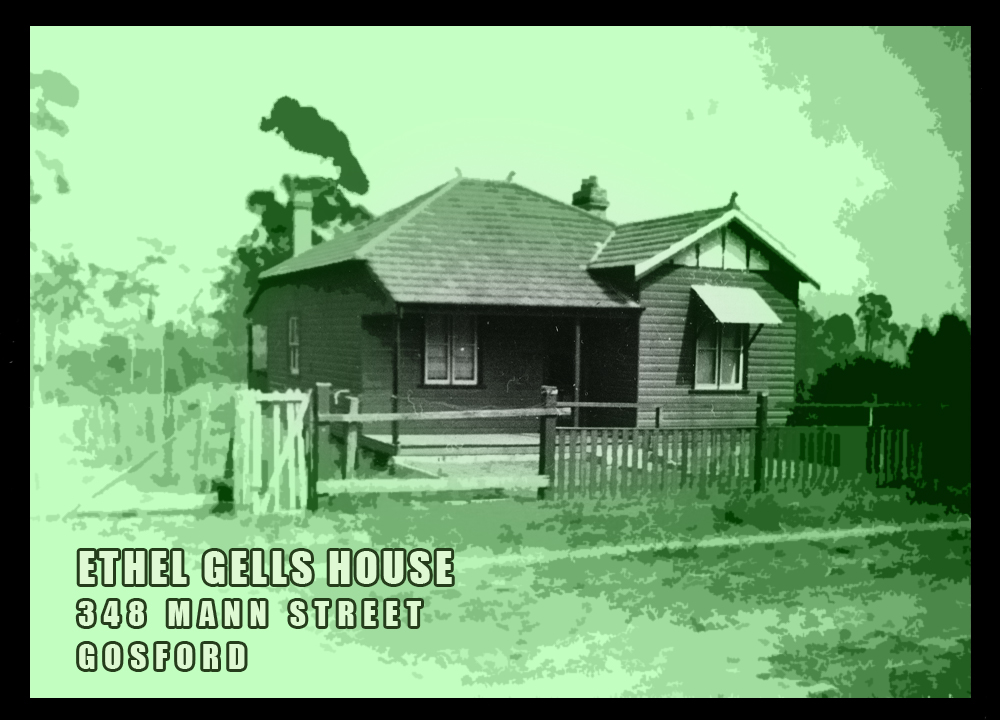
house

But if such was to be the case he felt sure that Gosford could respond just as nobly in the future as in the past.

He had had the pleasure of knowing the deceased soldier (Private Gell) since he was a boy, and also his widow, and he was proud to have had their acquaintance. He also spoke highly of  his associations with Mr. and Mrs. Hall and family, of whom Mrs Gell was a member Referring to Private Gell the speaker eulogized the spirit of duty which prompted him to enlist and go forth to fight for the protection of his wife and children and the freedom of the civilized world.

face shot

He sympathised with Mrs Gell in the loss of her good husband, but she had the satisfaction of knowing that she was residing among a hospitable people who would never see her in want. Mr, Archbold made reference to the healthy position at the front to-day, but advised his hearers not to

become overconfident. Everybody was expected to do their best to win this war. They had to prevent at all costs Germany from dominating the world.

open house

Personally, he had no respect for a German no matter how long he had lived in this country, and the only way lie could regard a German us good was when he was dead. On the other hand he bad the greatest respect for our own soidiers, and asked everyone to give consideration to the returned hero.

Of this number 600 had made the supreme sacrifice, whilst 700 had been invalided home. He was proud to say that the Society had pledged itself to the last copper, and no member or ‘heir dependents would ever be in want while there was a pound left in the bank.

He was proud of the members of the Society and members of all other Societies who had nobly responded to the call.

Brother Purkins, Deputy Grand Master, supported the remarks of the previous speaker, and said it was with feelings of pleasure mingled with sadness that lie was present on an occasion such as this On Monday they would be carrying out a similar duty at Liverpool. He hoped it would I not be long before the Oddfellows had a big surplus, whereby they would lie in a position to help brothers ! returning from the war. He was pleased to see so man} of the members of the Gosford Branch present, and congratulated the people on the interest they had shown in coming forward that day. | Bro Muston, , D.G.M. of Cumberland District, also spoke.

Brother Trohair then called on Mr. Wallace Moore, the contractor, to hand over the key of the cottage, and in so doing complimented Mr. Moore on the excellence, of hia work, the report of the Society’s Inspector justifying him in saying that the contract had been well and faithfully carried out.

The Chairman then unlocked the door, and presented Mrs. Gell with the key Mr. Thomas Hail, on behalf of Mrs. Gell, sincerely thanked them for the assistance the Society had rendered in providing his daughter with a home, also the officers for their presence there that day, and particularly the members of the Gosford Branch, and all other kind friends who had in any

way assisted to bring about the occasion of that afternoon’s assemblage. He also tendered his thanks to the ladies of the Gosford Red Cross, and concluded by saying that he could not find words to adequately express his feelings of gratitude towards the people he had had the honor of living among for so long.

Inscribed medals were presented to the following returned soldier members of the local Lodge, with honors of the Order : — Drivers J. F. Sterland H. T May and W. Sterland, Trooper B. Ward, and Private W. Goodsir.

Cheers and the National Anthem brought an interesting afternoon to a close, after which refreshments were served.

Scotts

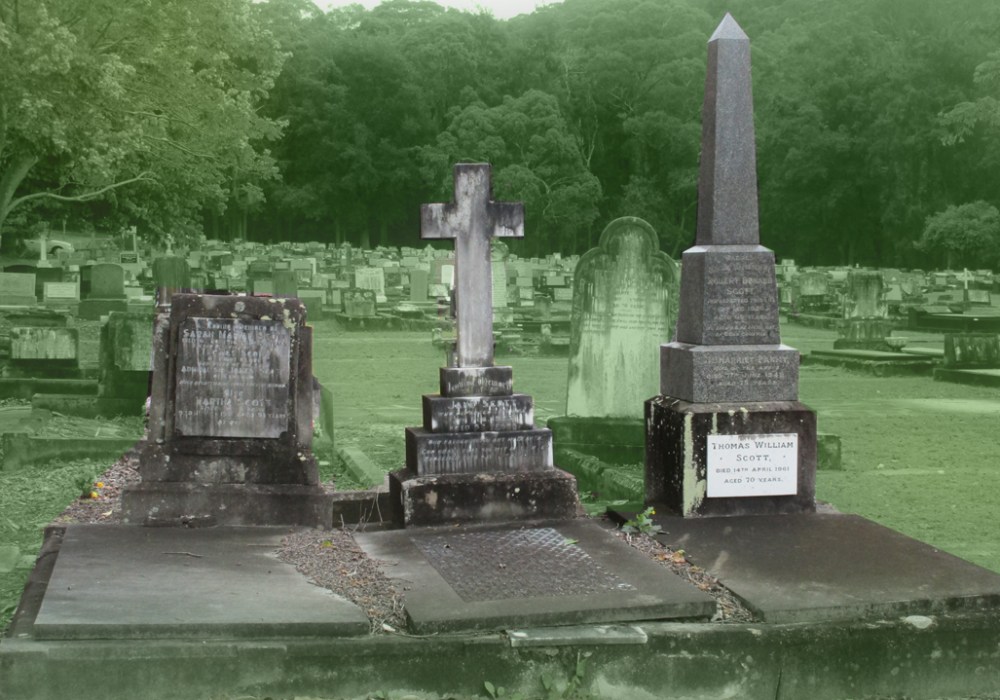
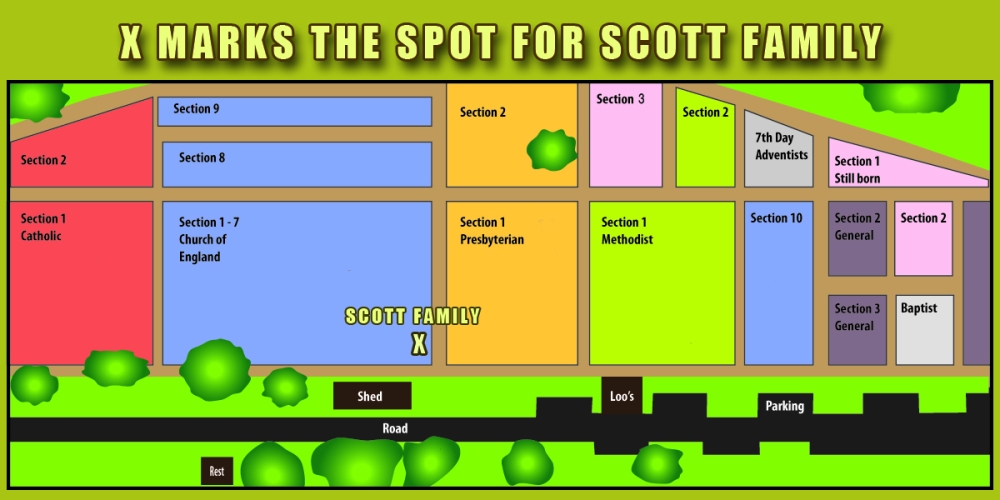
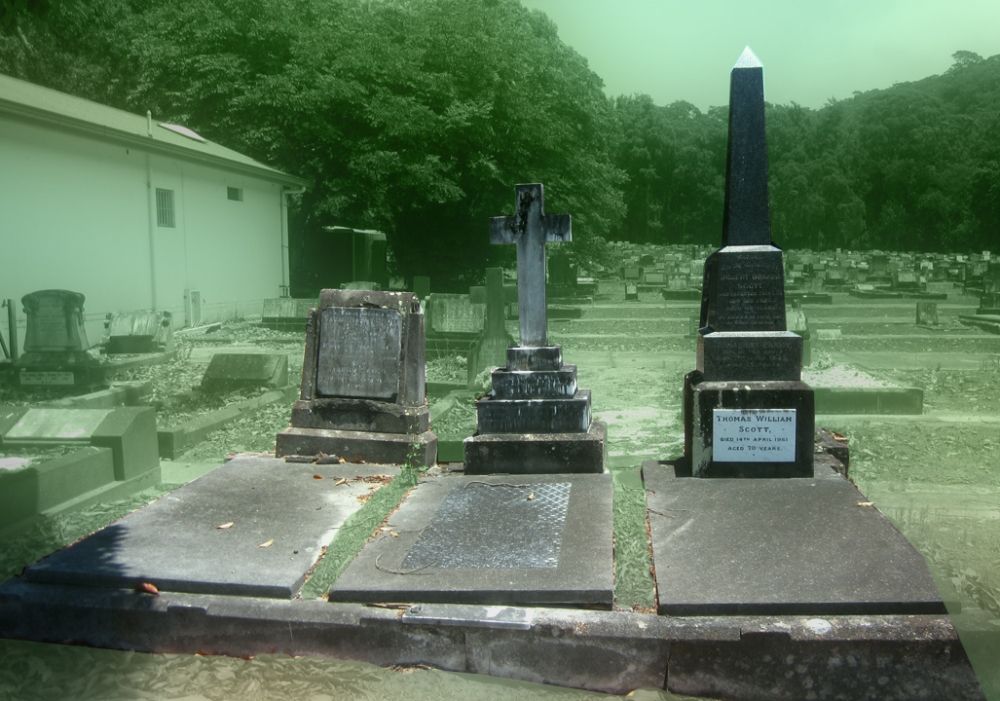
Robert Donald Scott Church Of England Section 1 Row 1 Plot 6

map template.jpg

The Scott Family.

23 November 1916

Death of Miss Scott.

Miss Sarah Maria Scott, who died at her residence, Point Clare, on Thurs

day last, was 83 years of age, and was the second daughter of the late Mr,

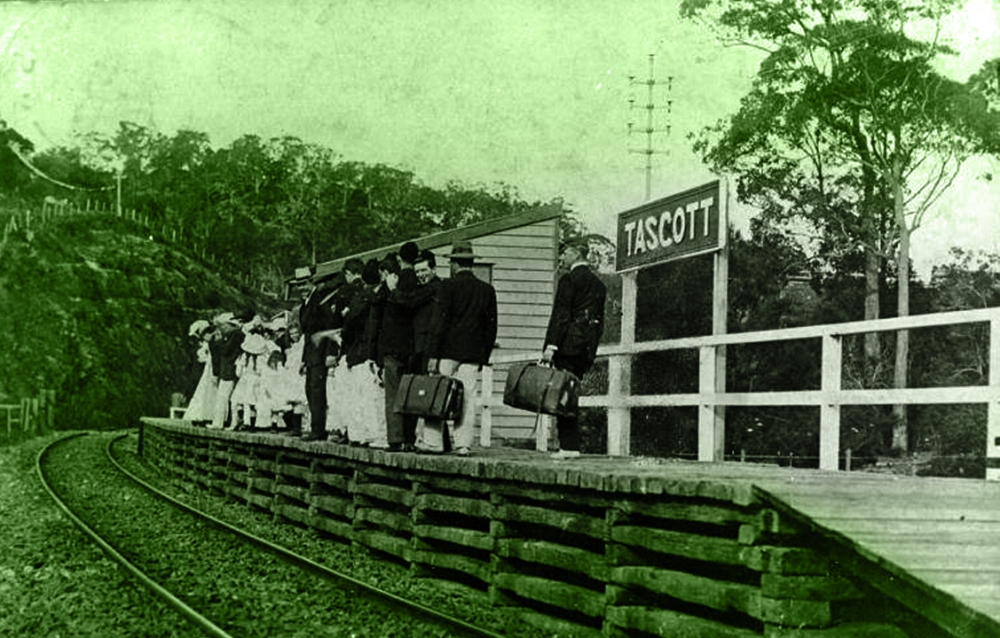
Thomas  A. Scott, after whom the railway platform, ‘Tascott,’ is named.

The funeral took place on Saturday, the remains being interred in the

Church of England portion of the new cemetery at Point Clare.

Rev. A. Renwick, Rector of Christ Church, conducted the burial service, and

Messrs. Creighton & Sons had charge of the mortuary arrangements.

bob don
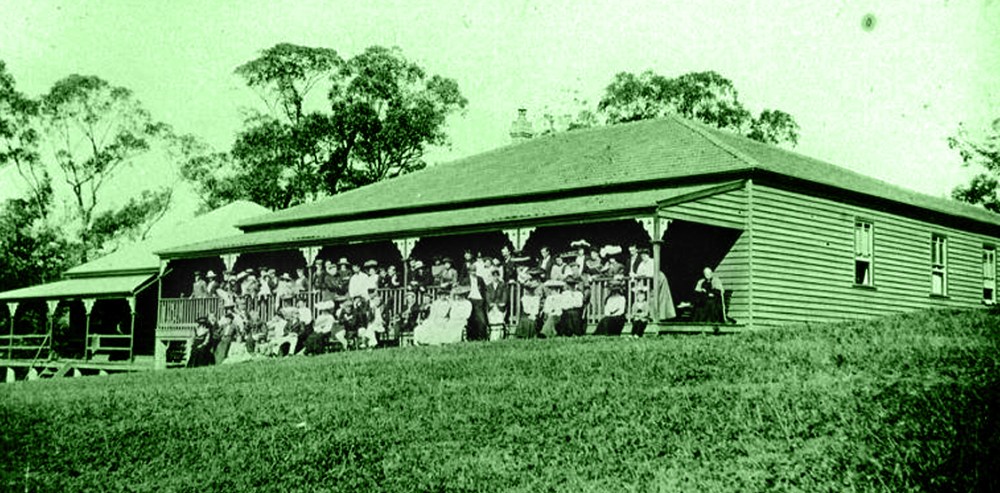
Robert Scott, another of T.A. Scott’s sons was making a living running a holiday home at the former family home called Waterview  (it was situated on the small hillock near Tascott railway station, now called Waterveiw Place). When this happened.

holiday

16 December 1920

Railway Fatality at Tascott.

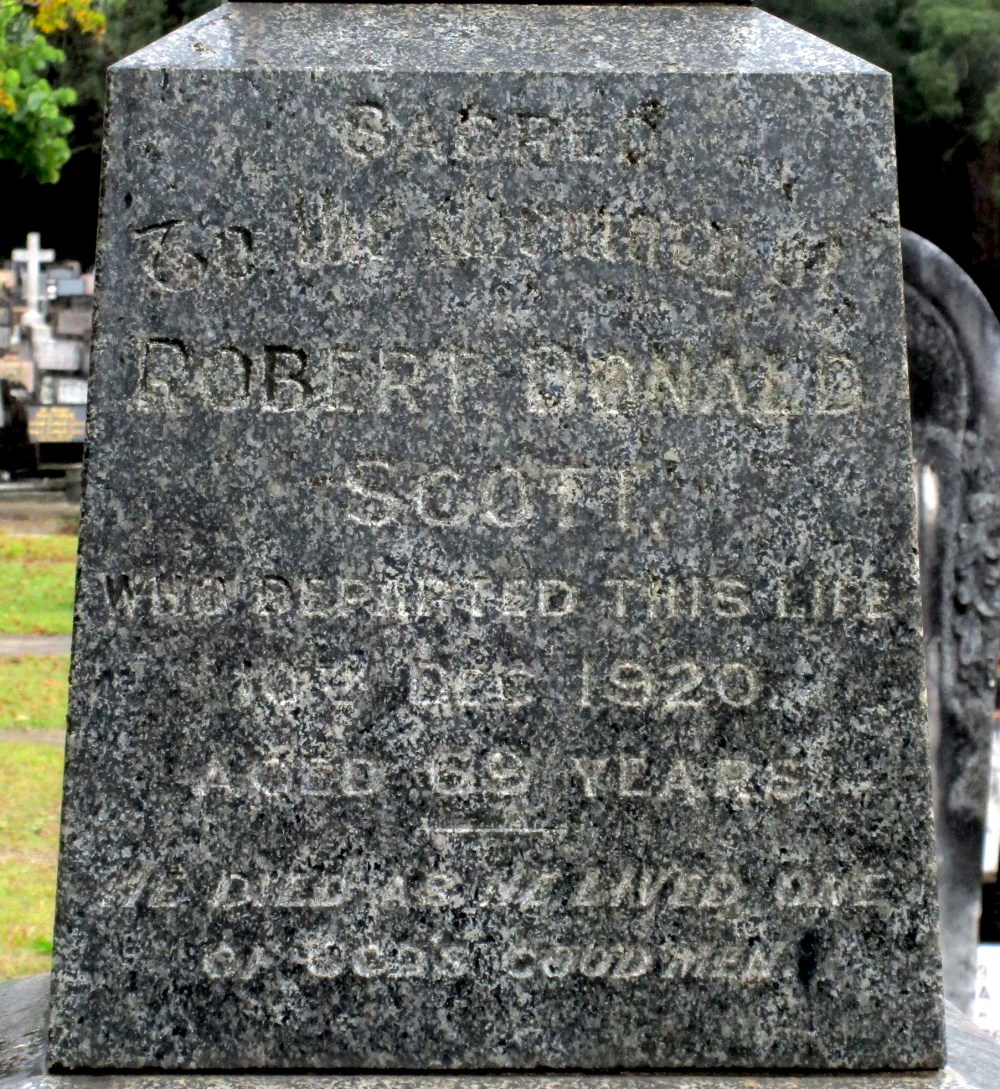
DEATH OF MR. R. D. SCOTT.

It is with deep regret that we have to record the death of Mr. Robert Donald Scott, an old resident of Tascott, which occurred in tragic circumstances on Friday last. Deceased left his home that morning and was returning from over the line about mid-day while the storm was at its height. As the roads were impassible he was compelled to traverse the railway line and was walking between the rails when overtaken by the Brisbane express bound for Sydney. Death must have been instantaneous. The accident was not noticed by the driver or fireman of the train. The tragic circumstances surrounding Mr. Scott’s death are heightened by the fact that hi§ son was standing on the verandah of his home and witnessed the accident which he was powerless to avert.

platform

At the inquest held at Gosford on Monday last a verdict of accidental death was returned. The late Mr. Scott was one of the oldest residents of the Brisbane Water district and was beloved and respected by all who came in contact with him. He was a son of the late Thomas Alison Scott, who was the original grantee of the land surrounding Point Clare and Tascott. He leaves a widow and one son, Mr. Thomas William Scott, who reside at Tascott. Two sisters, the Misses Martha and Jane Scott, reside at Point Clare, and another sister, Mrs. Annie Herbert, is at present in England, while his brothers are Messrs Archibald Scott, of Point Clare, and James William Scott, of Marrickville.

The funeral took place on Sunday at the Point Clare cemetery, the Rev. Arthur Renwick conducting the burial service.

headstone rd

Jane Scott was one other of the many children of Thomas A. Scott. To which whom the suburb TASCOTT is named after. Having lived all her life in the Brisbane Water district, she clearly was not coping with the move to a nursing home in Sydney, decides to escape.

22 February 1923

ACCIDENTAL DEATH.

A verdict of accidental death was returned by the Sydney Coroner, when he held an inquiry into the death of Miss Jane Scott, aged 81, who until recently resided at Point Clare. , Deceased was an inmate of the Nursing Home at Petersham, but appeared to be discontented, and on January 15, during the temporary absence of the matron, she apparently climbed over the balcony rail and slid down the verandah post to within a few feet of the ground, when she fell. She died on February 15 from her injuries.  

22 October 1931

Death of Miss Martha Scott The death of the nonagenarian Miss Scott, which occurred on Oct. 11, and which was referred to in our last issue, recalls a number of interesting facts in connection ‘with the early history of the Brisbane Water district.

Her father, the late Thomas Scott, was the first man to grow sugar cane in Australia. He commenced its cultivation at Port Macquarie, and later, when he went to reside at Point Clare, he grew cane there, but soil and climatic conditions proved unsuitable. As the pioneer of the sugar industry in Australia, the Government granted Thomas Scott a pension. He was then a man of advanced age, but he continued to draw the pension until his death at the age of 105 years. His wife, Annie Scott, also died at the age of 105.

They reared a large family of 7 daughters and 5 sons. Three of their children are still living. They are Annie (Mrs. Herbert), who is in England; Mr. Archibald Scott (Point Clare), and Mr. James William Scott (Woy Woy). Strange is the fact that four of the family passed away on October 16, and all at Point Clare.There are 7 of the 12, of Thomas Allison Scott’s children buried here at Point Clare Cemetery, they are, Sarah, Jane, Robert, Martha, James, Harriet and Archibald.

bd scott

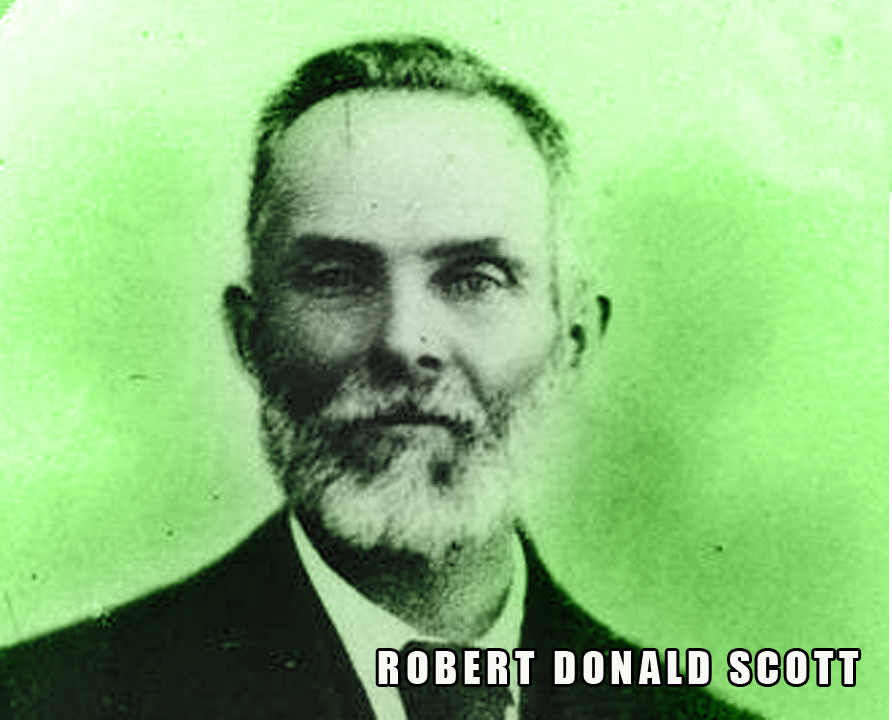
Robert Donald Scott.

AN APPRECIATION.

On Friday, December 10, As the result of a train accident near his home and railway station, Tascott, there passed away one of the best known pioneers of Brisbane Water — Robert Donald Scott,

Born in the district where he had lived tor over sixty-eight years, Mr. Scott was probably one of the most widely-respected residents. To know him was to love him. The present writer has had the privilege of acquaintance with him for twenty years and of appreciating his sterling qualities. Of quiet and retiring character, ho nevertheless possessed shrewd judgment and business faculty in his dealings, but his kindliness of disposition and unswerving honesty of purpose, combined with a wholesome sense of humor endeared him to all with whom Le came in contact. It may be said ‘truthfully that he made no enemies, oven among those with whom he was not always in agreement

For a man of his years he accomplished more in the way of daily work than is usually done by many much younger men. Methodical habits and consistent energy, aided by a sound mind in a sound body, were the secret of this. He lived the simple life, carefully conserved the blessing of health which was bestowed upon him, and tried to do all the good he could in passing through life.

This outlook and object are surely noble, but with Robert Scott they were faithfully adhered to, and brought to him great peace of mind and contentment.

The late Mr. Scott came of excellent family, of Scotch descent. As most residents of the district  now, his father, Thomas Allison Scott, was the first Clerk of Petty Sessions at Brisbane Water, and a man who made rely markable efforts early last century to J establish sugar-growing in New South Wales.

For his w ork in this direction honor to his memory has been accorded recently by the Royal Agricultural  Society of N.S.W. He lived to the age of 105 years, and lies buried in the old cemetery at Point Frederick, Gosford.

His uncle was Sir James Scott, Admiral in the Royal Navy, and other members of his father’s family were distinguished in mercantile pursuits.

His mother came from England as a child, and after her marriage lived at Point Clare for over seventy years, dying at the mature age of 93.

Two brothers, Archibald and William, and three sisters survive him. Two of the latter, the Misses Martha and Jane Scott, have been resident at Point Clare for many years; the other sister married Dr. Herbert, and was once resident in Gosford, but has been long away from Australia.

The late Robert Scott spent the earlier years of his life at the place of his birth. In his thirties he went to y. the metropolis, and for a time engaged in business. While there he also married. His native hills called to him, however, and he soon returned to Point Clare, where Mrs. Scott established, and developed to a wonderful degree, the boarding-house so long known as Waterview, a name very familiar to holiday-seekers throughout  the length and breadth of the State.

This famous house of accommodation, although Mrs. Scott retired from its management some years ago, remained in its old location until twelve months since, when unfortunately it was destroyed by fire. It was to serve the needs of this house that the Tascott platform was erected by the Railway Commissioners, the name being derived from the initials and surname of Mr.

Scott’s father. (T.A.Scott).

Mr. Robert Scott is survived by his Wife and son, who live near the old house.

The areas of the surrounding were his property, and at the time of his death he was actively engaged in preparing for sale a sub division, including the ‘Waterview’ property.

In closing this sketch, which it is? is all too imperfect to do justice sterling worth of its subject, what I write desires to record a profound sense of deprivation, both to himself and to the district, by the untimely removal of one who, had he been would have continued in the paths of large-hearted kindliness so lovingly followed, by him in the past.

His labors here have ended, and he is at rest, and so who remain are the

poorer by the loss of his benevolent and beneficient personality from amongst us, but his good works and legacy will not be readily forgotten by those who knew him, and will serve as his lasting memorial.

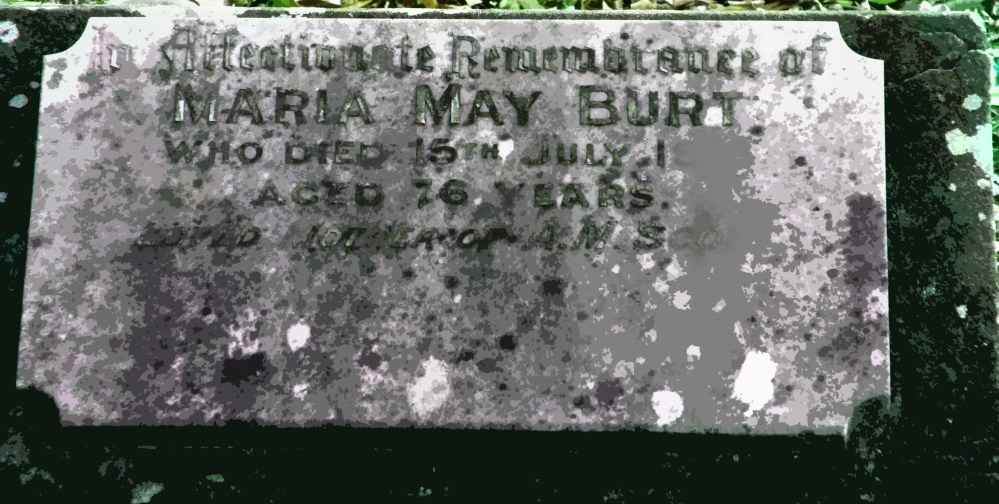
maria burt

21July 1916

Obituary.

Mrs Burt, aged 77 years, passed away at the residence of her only daughter, Mrs Archie Scott, West Gosford, at 9 o’clock on Saturday night.

Deceased lady was the relict of the late Sydney Burt, who in the early days, was a Sydney lawyer and also developed into a prominent business man, doing a large trade in shipping horses to India. It is related that on one occasion he shipped over 200 head and did not insure them. The first night after their departure he dreamt that he saw the vessel wrecked and the horses drowned.

Next morning he went to an insurance office and insured the horses. Sure enough two days later the Shine was wrecked at the very place Burt dreamt about, and not a horse was saved. Mr. Burt spent some years in Fiji, and during his career made, speculated, and lost three fortunes.

The late Mrs. Burt was a resident of Gosford for about ten years, and had been- ailing for the past three months. The funeral took place on Sunday afternoon, the remains being interred in Point Clare cemetery.

Rev, A. Renwick read the burial service.

Lone Pine

The pine tree you see down by the front gateway.

map template

28 August 1915

Sydney Morning Hearald

LONESOME PINE.

HEROIC  FEAT.

FIRST BRIGADE’S WORK.

(FROM CAPTAIN C. E. W. BEAN, OFFICIAL PRESS

REPRESENTATIVE WITH THE AUSTRALIAN

FORCES.)

GABA TEPE, Aug. 18.

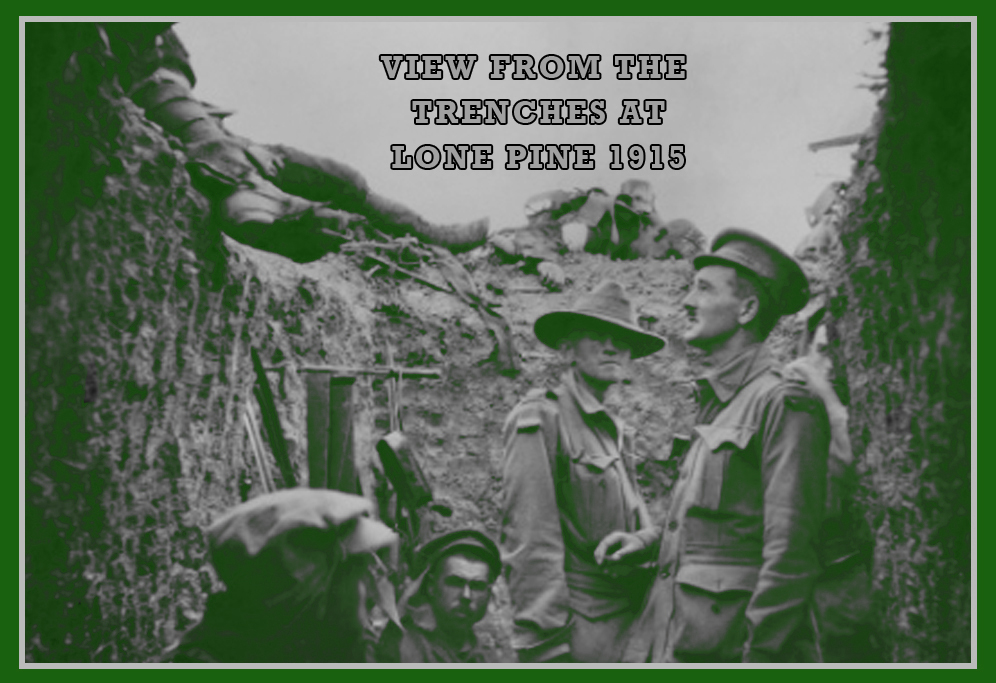
An inspection of the Turkish trenches captured at Lonesome Pine has shown what an extraordinarily formidable obstacle the First Australian Infantry Brigade was up against when ordered to take this position. For month upon month we had seen the Turks piling up colossal parapets, and could see that the place was a labyrinth. It was be-cause it was so strong and important, and because we desired to give the Turks a really heavy blow at the southern end of the line, that these trenches were chosen for attack.

The Third Brigade had made a famous assault on the landing; the Second made a wonderful charge at Helles. The First Brigade was therefore chosen to assault Lonesome Pine. It was a tremendous job to put before any brigade, but these Australasian infantry never from first to last showed the least concern about it. I was with them five minutes before the start behind the parapet over which five minutes hence they knew they would have to scramble in face of rifle fire, machine guns, and shrapnel. They did not know what might be awaiting them in the deadly space between the trenches, but not one man showed the slightest sign of uneasiness. A man would pass along the trench to find his platoon just as a belated spectator might hurry to a seat before the curtain rises. Passing he would recognise some friend.

“Good-bye, Bill,” he would say; “meet you over there.”

“So long, Tom,” was the reply. “See you again in half-hour.”

“Are you going to got a photograph of us?” they would ask me. “How do you work it on sandbags or through a periscope? What sort of camera is it? My word.  A great chance for a photographer.”

And then conversation was suddenly cut short by the voice of a little officer crouching just below a parapet: “Get ready to go over parapet.”

He glanced down at a wrist watch, and so did I, 5.27. The men crouched up a little higher on the recess, preparing to spring. Those in the trench below got a firmer foothold. The little officer unstrapped a whistle from his wrist, and held it between his teeth. He looked down at his watch again.

The man next me asked “What time is it?” I looked down. “Well, I make it 5.30,” I answered. The bombardment had apparently stopped. A few minutes’ breathless silence, then a whistle sounded. Within a second the little officer had blown his whistle, too.

lp trench 1915

There was a scramble of feet over the parapet, the sound of falling earth, the knocking of accoutrements, the peck, peck of Mauser rifles from the trench opposite had already begun, and gradually swelled into a rattle. A man fell past me into the trench, bleeding from a wound in the mouth. Out in the scrub a line of our old pea soup Australian khaki was racing, jumping low bushes and wire, straight for the enemy’s trench. When they got there they experienced what in military phraseology is known as a check. That is to say, instead of an open trench into which they could jump and bayonet Turks they found themselves looking down on a solid roof of pine logs, covered with earth on which the bombardment had not made any perceptible impression. This surprise might well enough upset the nerves of some troops, but the behaviour of the First Brigade did not give the onlookers the least cause for anxiety. The men were clearly puzzled what to do, but did not show the least sign of ever thinking of retreat. Some ran on to the second and third trench till they found open trenches where they could fire down and jump in. Others strung out along the first trench, firing in to loopholes from which the Turks were still shooting.

lone pine 1919

Others jumped down into a few gaps left without head-cover; others noticed small manholes every here and therein the solid roof of the trench, and began to lower themselves into the trench feet fore-most through these, a feat of daring which, it had been a solitary example, would certainly have won the Victoria Cross in any previous war. Those who could not get in simply lay down outside on the parapet, firing down the communication trenches until they could think of something else to do. The first Australian infantry has made itself a wonderful name at Gallipoli.

Certainly no finer feat has been accomplished here than this taking of Lonesome Pine and holding it against a counter-attack-lasting six solid days. New South Wales cannot be too proud of her The Australian naval bridging train has landed with a British force at Suvla Bay.

lone pine cigggie card


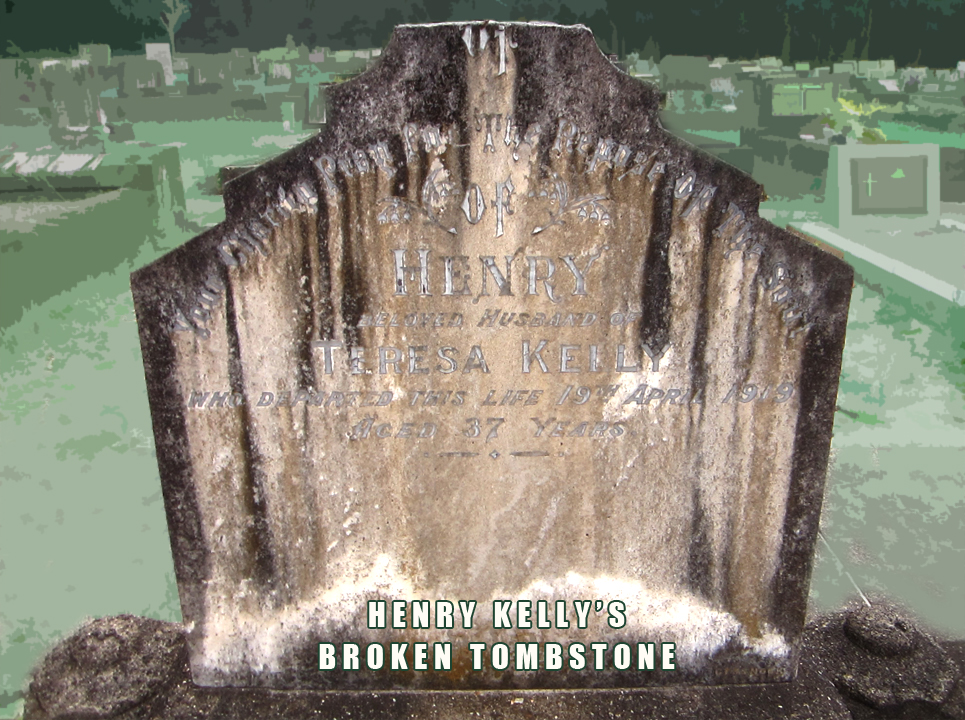
Henry Kelly

Henry Kelly

map 2018.jpg

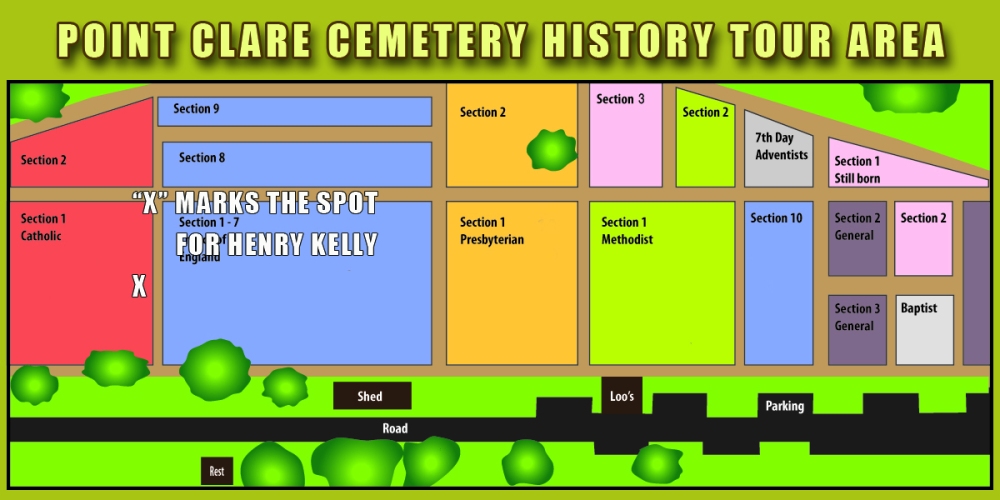
Roman Catholic Section 1 Row 1 Plot 10

henry

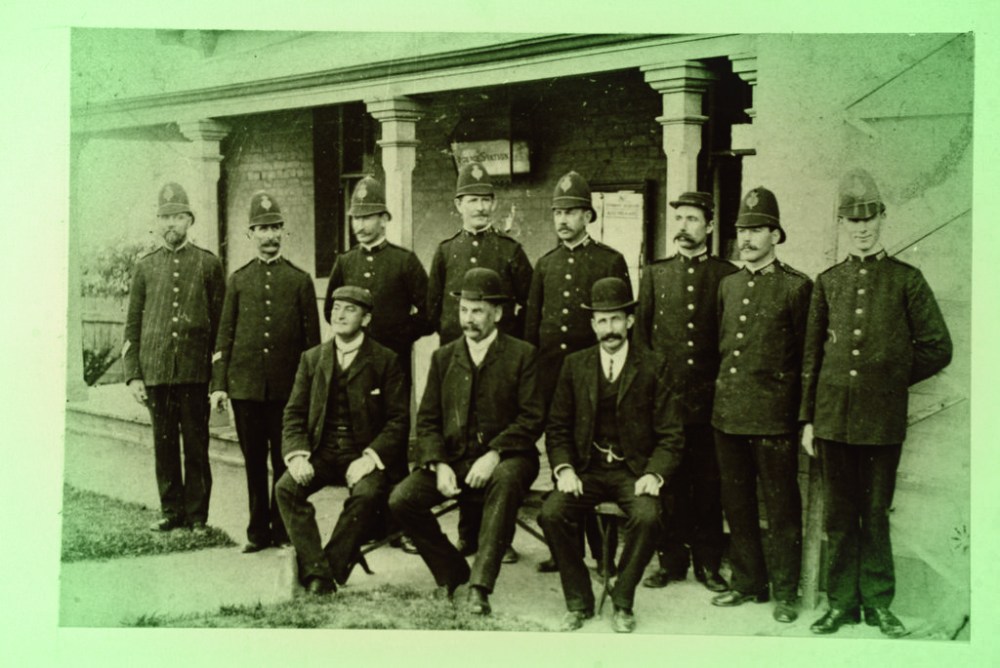
Constable Henry Kelly was married to Therese May Kelly and had some children when he died in 1919.

Death of Constable Kelly.

The sudden death of First-CIass Constable Henry Kelly at Gosford on Saturday morning last cast a gloom over the community, for he was an exceptionally popular officer and a man highly esteemed and respected by all classes of the people. His illness hardly extended, over 24 hours, and the doctor’s certificate attributed heart failure as being the cause of death. Deceased was a native of Orange, and was 38 years of age.

He served three years with the Bushmen’s Contingent in the Boer War, and held the King and Queen’s medals with. 6 clasps. Joining the Police Force 16 years ago, he was stationed at Newcastle and Ourimbah, and three years ago came to Gosford as a permanent officer. He married Miss Boland, daughter of Mr. John Boland, of Allandale, near Cessnock, and leaves a widow and two children to mourn their irreparable loss. Miss . Boland is sister to Sergeant Boland, one time stationed at Gosford. The funeral on Sunday afternoon was one of the largest ever seen in the district.

Some 60 young men walked in front of the hearse, on either side of which marched members of the local Police Force. First-class Constables Noble (Gosford), Russell (Woy Woy), Cross and Moloney (Newcastle) acted as pall -bearers, and Sergeant Morris (Gosford), Sergeant O’Rourke and Constable Harding (Wyong), Sergeant Boland and Plain Clothes Constable Ryan (Newcastle; were also in attendance. Floral tributes smothered the silver-mounted cedar casket, and included those forwarded by the Newcastle and district police, Brisbane Water police, and Railway Station and Refreshment Room staffs.

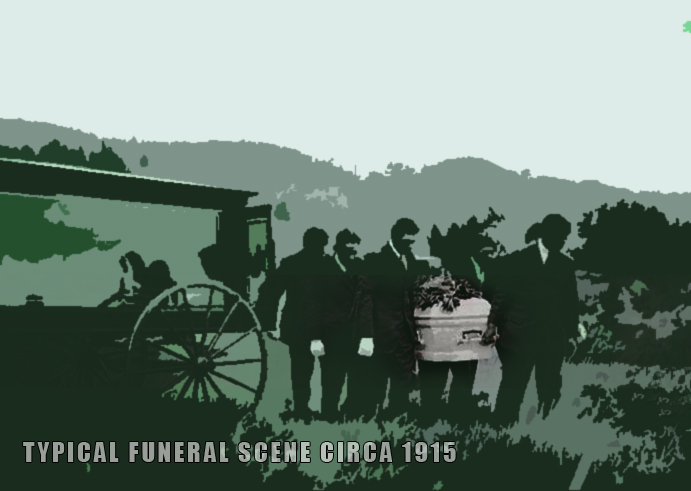
There were over 50 vehicles in the procession. The graveside obsequies at Point Clare cemetery were conducted by the Rev. Father Kelly assisted by Rev. Father Hogan, of Sydney.

Mr. R. H. Creighton carried out the mortuary arrangements. We tender our heartfelt sympathy to the £bereaved family in the loss of a loving husband and father. The late ‘ Constable Kelly was a splendid fellow, most appreciated by those who knew him at best, and his untimely end touches the tender chord bespeaking the heart’s sorrow and regret at the passing of a man he could be rightly classed ‘one of Nature’s gentlemen.

kelly h

Bennett

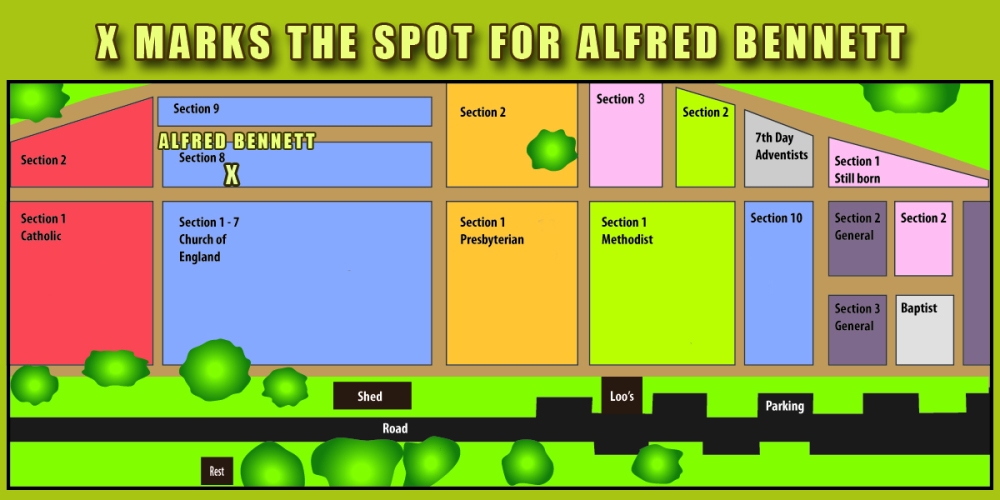
map template

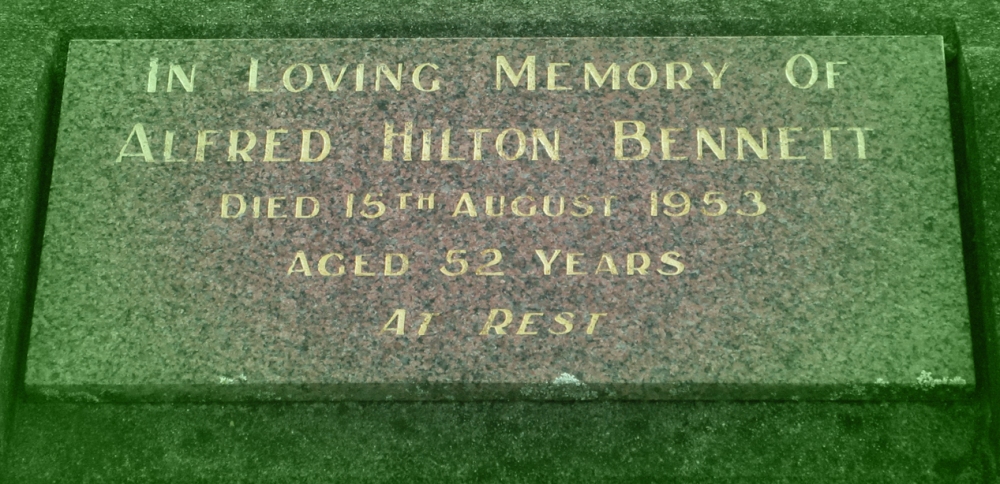
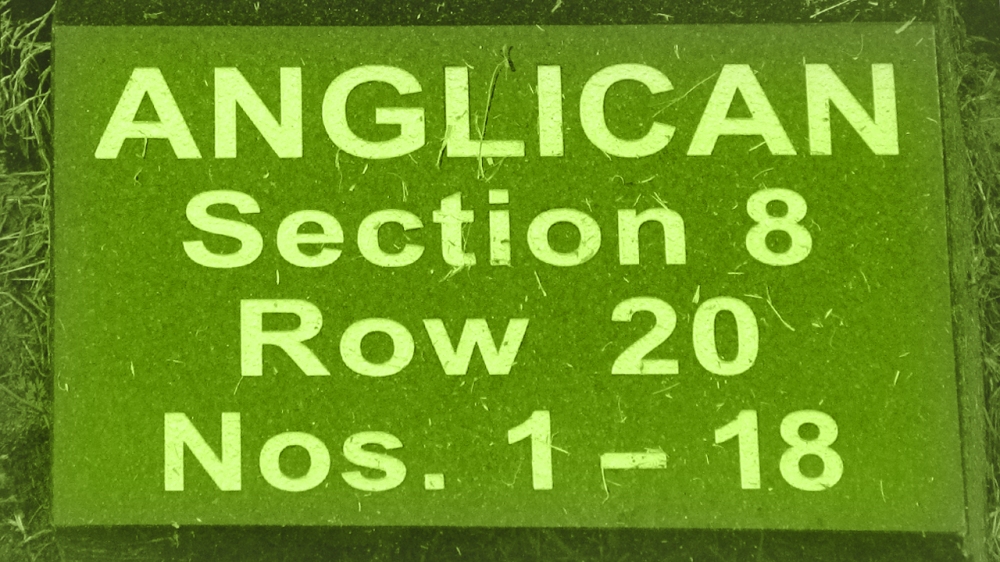
Alfred Bennett Church of England Section 8 Row 20 Plot 1

Untitled-1

18 August 1953

TRAGIC DEATH OF ORCHARDIST

 Late last Saturday afternoon, Alfred Hilton Bennett, 51 years, a well known Mangrove Mountain orchardist, was found dead, with a gunshot wound in the region of his heart.

 The tragedy occurred on his property, about half a mile from his home. There are no suspicious circumstances, state Gosford police.

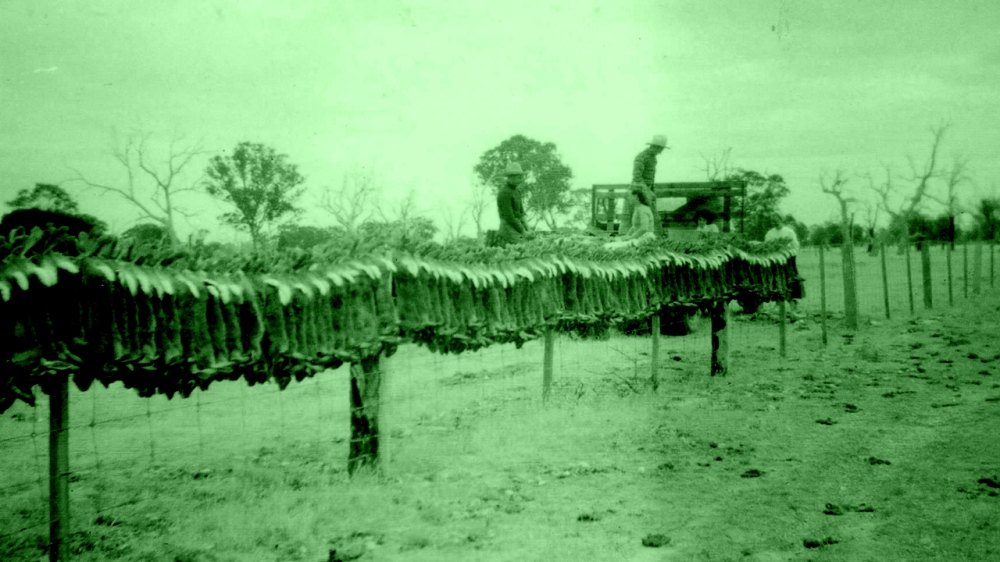
 Detective Cox, who carried out an investigation, was told that at about 2.30 pm Mr Bennett informed his wife and elder son that he was going to take a walk down to the cauliflower patch and would take his dog and gun with him as he might get a rabbit on the way.

The son left half an hour later to play tennis and when he returned about 5.30, he found that his father was still away from home. The son went in search of his father and eventually found his body on a bush track with a double barrelled shotgun lying beside him.

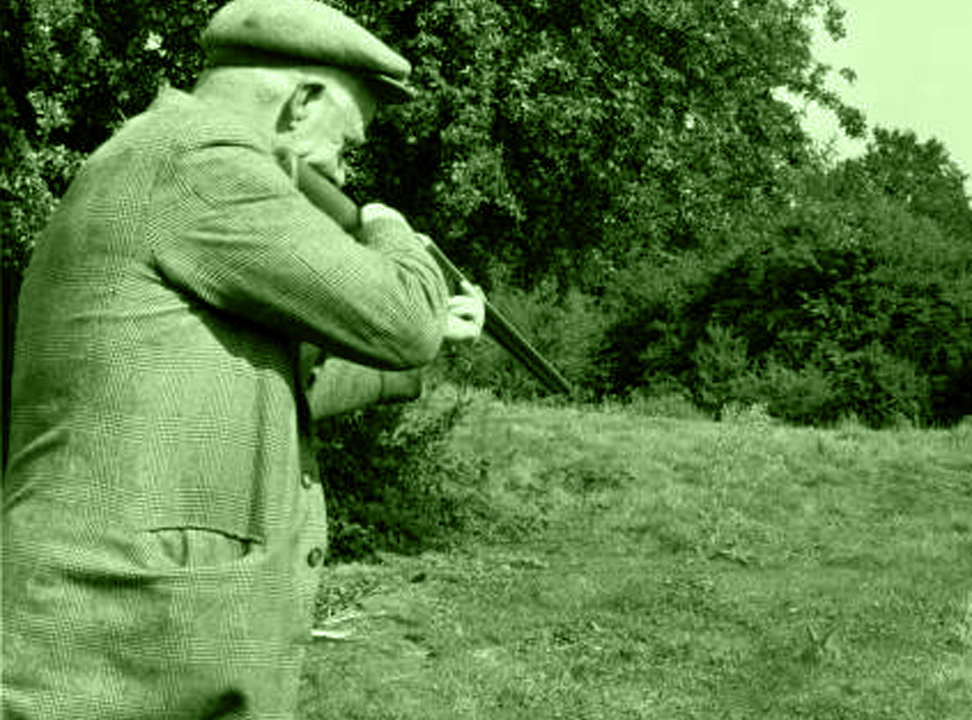
From an investigation on the spot. Detective Cox believes that Mr Bennett tripped over a fallen tree across the track and in his fall one barrel of the gun was accidentally discharged.

Untitled-1rabbit 2.jpg

The subsequent Inquest found,

11 September 1953

ORCHARPIST SHOT NEAR HOME TRAGIC DISCOVERY OF BODY BY HIS SON

A son who went looking for his orchardist father at Mangrove Mt on August 15 found him dead, victim of the accidental discharge of a 12-gauge shotgun.

The District Coroner (Mr. C. J. Staples) returned this finding at a Magisterial inquiry at Gosford on Wednesday into the death of Alfred Hilton Bennett, 51, of Wiseman’s Ferry Road, Mangrove Mt. evidence at the inquiry disclosed that on August 15, Bennett left his home at 2.30 pm, accompanied by his dog.

He took the shot-gun with him, telling his wife he intended shooting a rabbit for the dog. When he did not return by 5 pm, his son, William, went to look for him.

marker.jpg

 TRIPPED ON LOG

The son found his father’s body about 300 yards from the house with a gunshot wound in the chest. Const. K. A. Rhodes, of Gosford police, said Bennett I had apparently tripped on a log, discharging the gun when he fell.

Bennett’s widow. Iris Melba Bennett, told the Coroner that Bennett had had no financial or domestic worries. ‘The home was as happy as could be wished for,’ she added.

rabbit


Riley

map template.jpg

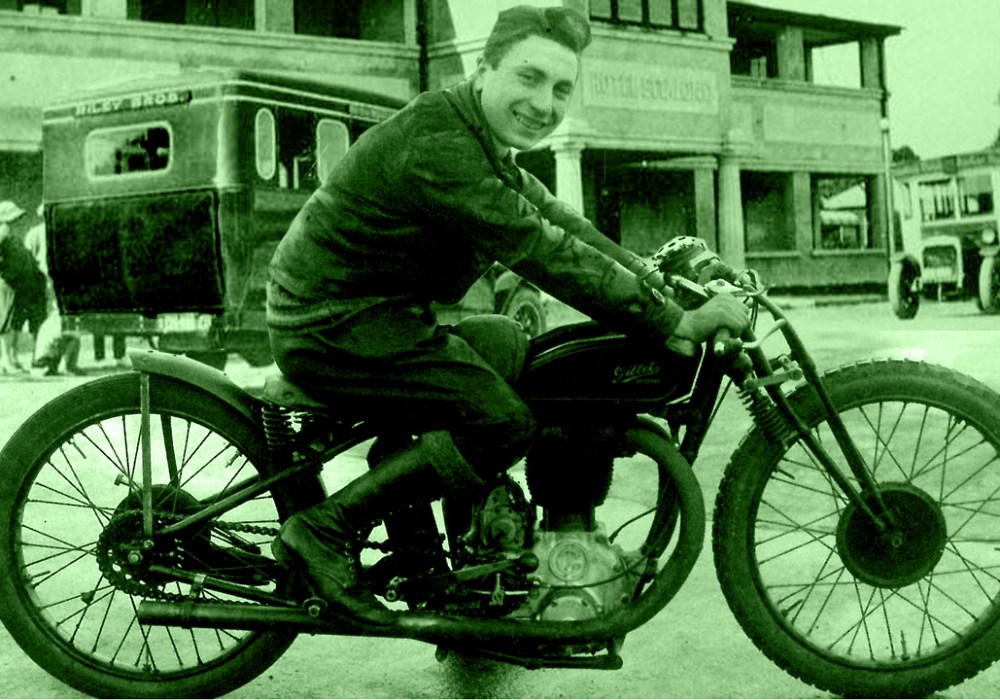
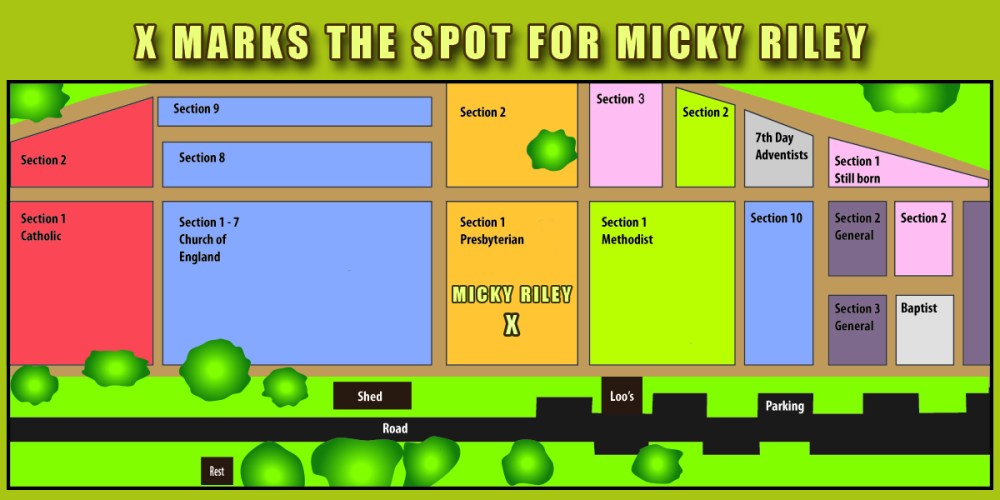
Keith (aka Mickey) Riley Presbyterian Section 1 Row 7 Plot 21

10th January 1950

YOUTH NOT SENT TO HOSPITAL

Bed Shortage, Says Doctor At Inquiry.

Although ill enough, a young man injured in an accident had not been taken to hospital because of the shortage of beds, according to a doctor at a Magisterial Inquiry at Gosford Court House on Saturday.

The inquiry was into the death on December 17 of Keith William Riley, of Booker Bay, who was injured in a motor-cycle accident early the previous morning.

Dr. George Craig Duncan, of Gosford, said at the inquiry that he had seen Riley at his surgery at about midday on December 16. He then appeared to be suffering from concussion.

Dr. Duncan said that he treated Riley and had told him to return home, go to bed, and lie flat. He had also told him to report his condition to him in several hours.

Later that afternoon relatives had reported by telephone that Riley was vomiting.

Dr. Duncan said he had ordered Riley’s admission to the Gosford District Hospital.

SHORTAGE OF BEDS

In reply to questions by the District Coroner, Mr. C. J. Staples, Dr. Duncan said:

‘When I first saw Riley, I thought he was ill enough to require admission to hospital for observation, but owing to the acute shortage of hospital beds, it was necessary to observe him at his home for several hours. ‘His people were instructed by me direct to observe certain symptoms, if present, and report them, at once to me. ‘They did so. ‘In my opinion, the cause of death was due to extensive subdural haematoma. There would be a fracture of the skull, in all probability.

‘An X-ray examination would have disclosed the fracture of the skull. I did not at first consider that there was a fracture present.

‘I consider that this boy had all the treatment that could have been given to him in the circumstances.’ The Coroner found that Riley had died at the Gosford District Hospital on December 17 from injuries accidentally received when he fell from his motor-cycle on the Pacific Highway at Niagara Park about 12.30 am on December 16.

headstone.jpg

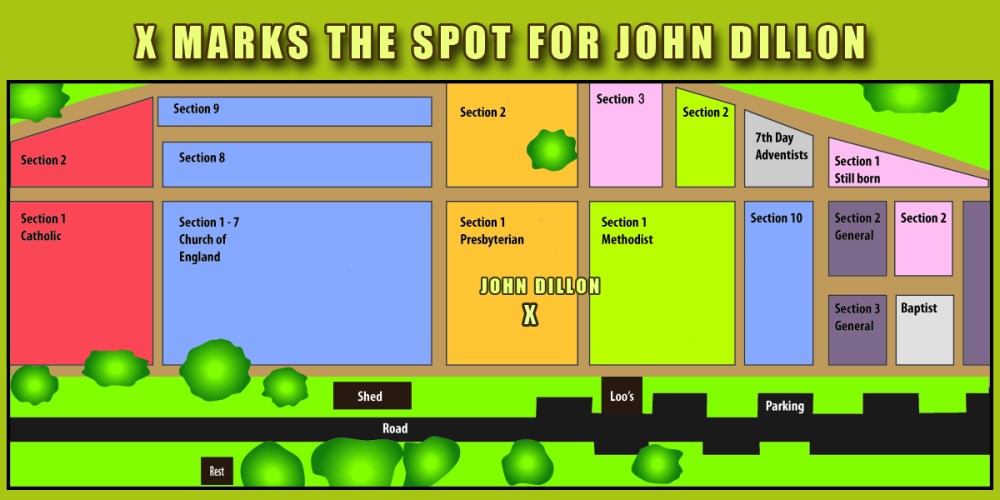
Dillon

map template

John Dillon Presbyterian Section 1 Row 4 Plot 11

tunnel

John Dillon

23 August 1940

THREE KILLED IN TUNNEL

Whole Gang Struck by

Freight Train

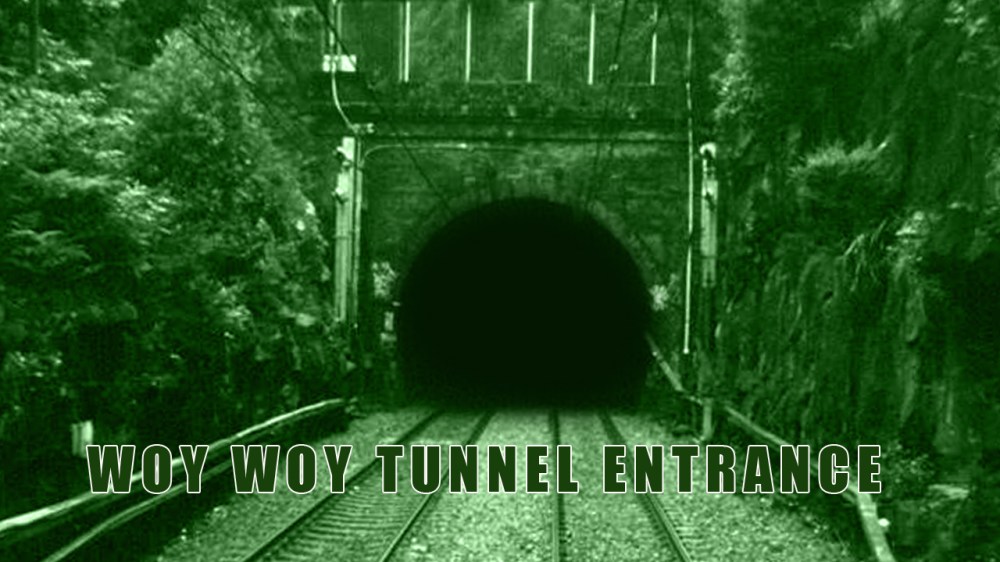
Four Seriously Injured Three men were killed in an accident in the Woy Woy railway tunnel yesterday afternoon. Four others were seriously injured.

DEAD

John Dillon, 37, married, of South Woy Woy.

Michael Shelley, 47, married, of Punchbowl.

Leonard Munce, 44, married, of Paddington.

INJURED

Reginald L, Mason, 28, married, of Adamstown;

William Whitten, 31, married, of ‘ Cardiff;

 Andrew J. Blackie, 41, married, of West Maitland;

Angus Blakely, 43, married, of West Wallsend.

They were struck by a north bound freight train 30 chains (A chain is approx. the length of a cricket pitch) from the northern end of the tunnel.

Those killed received frightful injuries. The fireman and driver of the train did not know the

accident had occurred until they were informed by the stationmaster at Woy Woy who stopped the train following a telephone message from the tunnel.

Working

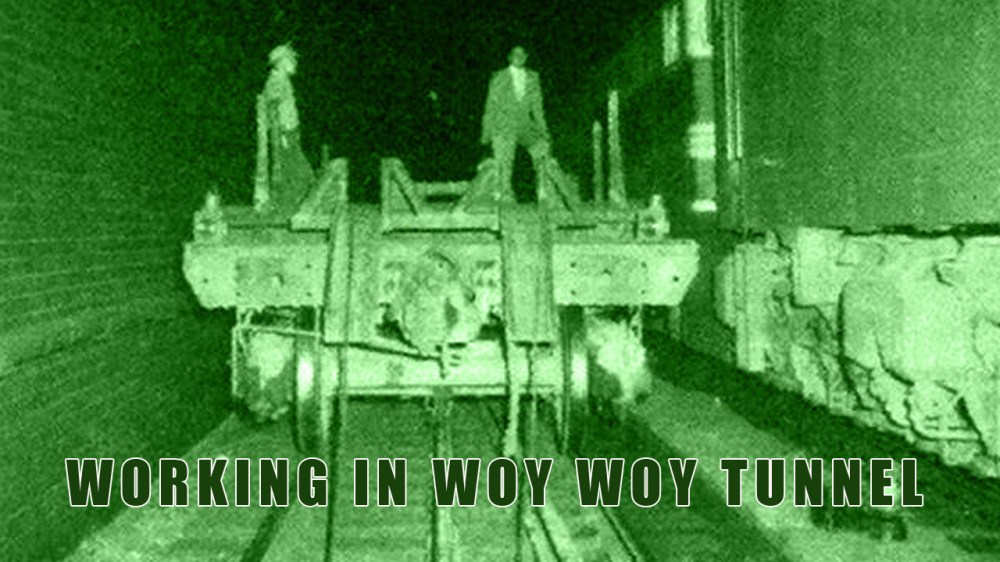
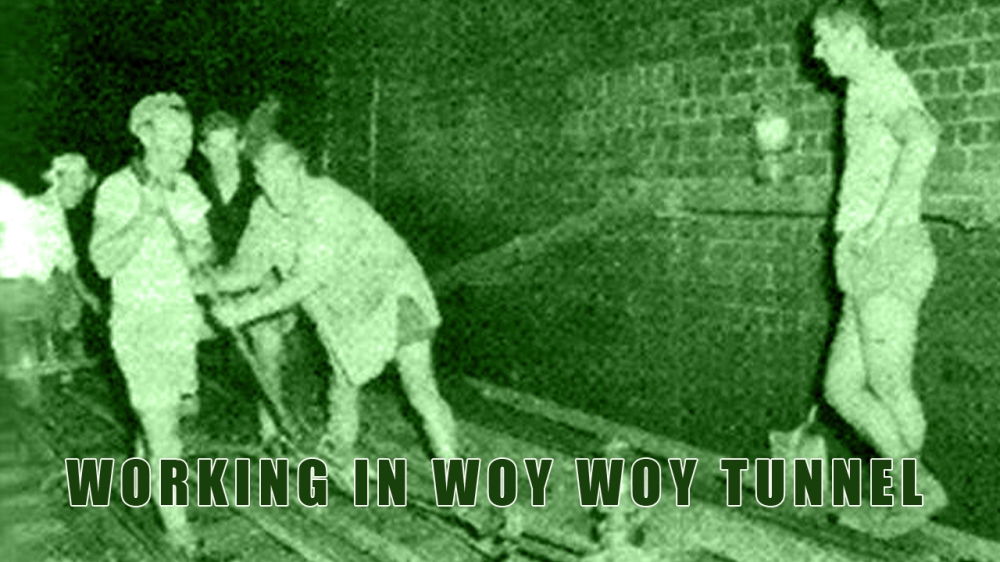
A cap and a hat were found on the front of the engine. For months now, two hundred maintenance employees have been camped near the northern entrance to the Woy Woy tunnel. They have been engaged on laying new rails through the tunnel, which is a mile and 10 chains in length.

The men have been working under dangerous conditions every day in the tunnel and the constant strain shows clearly on their faces. They’re poor men, with wives and children, and they get an extra 6d. each day to compensate them for the danger of the work they do.

Yesterday, the seven members of the ‘muck’ gang ate an early lunch, shouldered their picks and shovels, picked up their acetylene lanterns and marched off into the inky depths of the tunnel.

Ganger Shelley, who was one of the men killed, set the men to work near the middle of the tunnel. A drain was being repaired, cement being mixed on a board. No one knows exactly what happened after that.

work 3

Shortly after 1 p.m. a gang under a man named Kennedy, entered the tunnel from the Woy Woy end. A flag-man stationed at the entrance blew his whistle to give warning of an approaching train, and the men hastened into the tiny alcoves that are spaced at about 2 -chain intervals along the walls of the tunnel. (First Train).

A train thundered by and they moved out. From the other end of the tunnel came another train. Again the men dived for their alcoves as it thundered by. (Second train).

Some minutes later the men again took to the alcoves as another train went thundering through. Thinking the way was clear, the men again emerged from the holes in the wall and followed on. (Third train).

Suddenly, from up ahead, they heard the rumble of another train. Someone yelled , ‘Go for your

lives! She’s broken in two and the end’s coming back towards us!’

Panic took -hold of the gang.

There was a terrific clatter of shovels and smashing wood and men’s cries.

One . man threw himself down in the slush of the gutter alongside the rails; another fought his way to an alcove; another dashed madly back towards the opening of the tunnel; another jumped across to the opposite set of rails only to be hurled clear as he was truck by the side of one of the trucks of the fourth train.


He fell back into the space between the rails, but was not injured.

As the roar of the receding train died away, the men heard moans and cries for help coming from further along the tunnel. Their lights had been smashed in the panic, with the exception of two small lanterns. In the beams of these they saw a gruesome scene.

Every member of the ‘muck’ gang had been struck by the engine of the fourth train. One of the

men was decapitated, another was  so dreadfully mangled as to be almost unrecognizable.

The injured men were lying about everywhere. One, with blood streaming down his face, was vainly attempting to claw his way along on his stomach; another 4 lay very still in the blue metal at the side of the. track; others were strewn around. None had escaped.

The Brisbane Water District Ambulance was summoned from Gosford by telephone. Two ambulance wagons raced to the nearest point to the tunnel. Woy Woy Police and Dr. Delepine, of Woy Woy, arrived at the same time.

Constable L. B. Browne, of the Woy Woy Police, led the rescuers into the tunnel where the four injured men’s mates were lifting the injured onto rail trolleys. They were quickly brought out and along the railway line to a point where the Woy Woy-Gosford Road crosses the creek. Here they were lifted on to stretchers and carried down the steep bank into a waiting ambulance which rushed them through to Gosford and thence to Newcastle Hospital.

The three bodies were recovered from the tunnel later and taken to the Woy Woy morgue where they were identified to the District Coroner by Thomas Abbotson, of Ryde, a member of one of the gangs.

Work in the tunnel was suspended for the day, with the exception of one small gang which went back to make sure that the permanent way was safe for other trains.

An inquest will be held when the injured men recover.

traain


Pryor

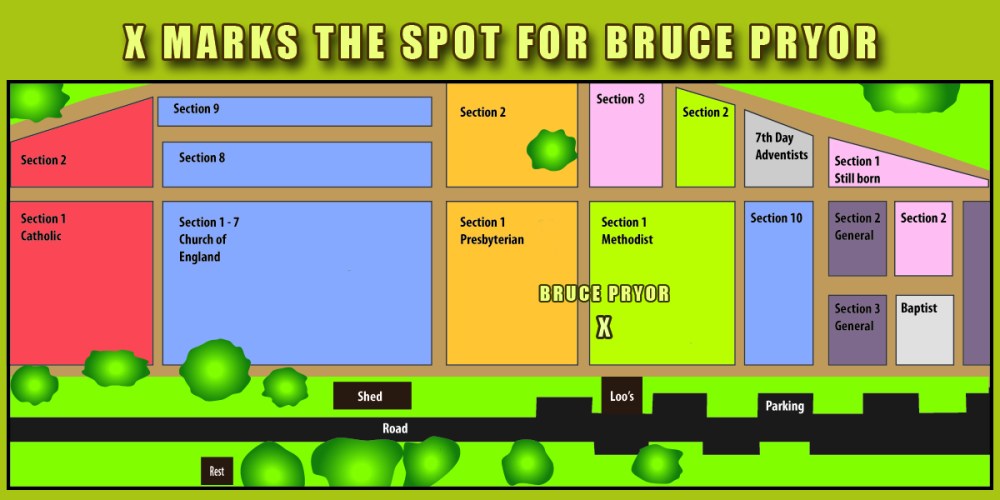
Bruce  Maitland Pryor Methodist Section 1 Row 5 Plot 8
map template

Newcastle Herald

28 January 1949

Murder Charge

At Bedside

SYDNEY, Thursday. – In a bedside court at Royal Prince Alfred Hospital late this afternoon, William Thomas, 19, who doctors say will never walk again, was charged with having murdered Bruce Maitland Pryor, 24, of Lisarow, near Gosford, on November 25.

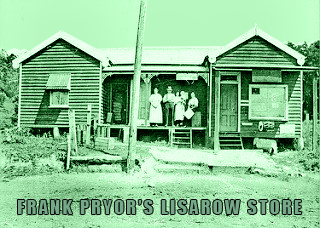
Pryor, returning from a visit to his fiancee on the night of November 25, saw an intruder on the verandah of his father’s house. Pryor challenged – the man and pursued him when he ran. The man turned and shot Pryor in the chest.

Pryor died in hospital three days later-the day before he was to have been married.

The morning after the shooting, Thomas was found lying under the railway bridge at Ourimbah.. His back was broken and a rifle was lying nearby. He has been in Prince Alfred Hospital under police guard since. Doctors say he will never walk again. He is paralysed from the waist down.

Thomas was remanded till February 23rd 1943, when the inquest will be held. To-night he was taken to the infirmary at Long Bay Gaol.
 pryors store lisarow

Newcastle Herald

31 May, 1949

Fettler Unfit to Plead!

SYDNEY, Monday. -. Charged with murder, a l9-year-old fettler, whose spine was fractured, was ordered by Mr. Justice Dwyer, in the Central Criminal Court to-day, to be kept in strict custody till he had been dealt with under the      Lunacy Act. : Without leaving the box the jury found that the prisoner, Robert Mathew Thomas, was insane and not fit to plead.

Thomas was carried into Court on a stretcher.

A male nurse sat by him throughout the proceedings. Thomas been bedridden since his arrest: on November 26. Thomas was charged with having murdered Bruce ‘Maitland Pryor. The Crown said Pryor was shot at his home at Lisarow, near Gosford, on November 25, anti died in hospital on December 1; A few hours after Prior was found wounded, Thomas, according to. the Crown, was discovered some distance away, having apparently fallen from a railway viaduct, and had broken his back.

 detail

25th  February 1949

 Lisarow Murder: Youth Committed For Trial

 At Sydney Criminal Court Sessions

 Swathed In Plaster He Is Brought Into Court On A Stretcher

 Women Weep As Details Of ‘Felonious And Malicious’ Slaying Are Revealed By Witnesses

 Robert Matthew Thomas, a 19-year-old railway construction worker, will stand trial on March 7 at the Sydney Criminal Court on a charge of murdering Bruce Maitland Pryor, 24-year-old Wyong Shire Council employee and returned soldier, of Lisarow, who was found shot outside his father’s home on November 25 last.

 The City Coroner (Mr M. J. D. Austin) committed Thomas for trial at the conclusion of an inquiry on Wednesday when he found that Pryor had died from a wound1 in the abdomen arid that Thomas’ had ‘feloniously and  maliciously murdered him’.

 Thomas, swathed from head to foot in*plaster, was brought to the court in an ambulance from hospital where he has been since he was found with a broken back under a railway bridge the day after Pryor was shot.

 He listened to evidence from a special bed in court. When Thomas was being carried into court an elderly woman became hysterical and was led away by police officers. Throughout the hearing two women who sat beside Thomas wept frequently.

 Frank Maitland Pryor, store keeper, of Lisarow, father of the dead man, said that his son left home about 9.50 pm on November 25 to take his fiancee, Miss Gladys May Peck, home.

 Pryor said he went to bed and was reading when he heard his son cry out, ‘I have been shot’.

‘I jumped out of bed (and ran to the part of the house where the cry came from’ said Pryor.

He said he found his son lying on the front lawn with both bands across his chest. He was bleeding from a bullet wound in the chest, witness said.

 When he asked hid son who shot him ho replied ‘1 don’t know, dad, but ho went the station way. I’ve had it, dad’. In the hospital his son said, ‘You always look after Glad, won’t you, dad?’

Pryor said his son and Miss Peck were to have been married on Saturday, November 27.

In the ambulance on November 26 Pryor said to his son, ‘They have got the bird. Do you know a chap named Bobbie Thomas?’

His son said, ‘No’.

Pryor said he told his son Thomas was one of the men camped at the Ourimbah (Railway Construction camp but his son said he did not know any one from the camp.

Sgt Brownette (Police Prosecuting staff assisting the coroner) :

‘Do you know Thomas, the man  in court?’

 Pryor: ‘I have never seen him in my life and do not want to see him again’.

Gladys May Peck, machinist, of Pacific Highway, Niagara Park, said she had known the dead man all his life and had been keeping company with him since 1947.

She said she was engaged to him and they were to have been married two days after he was shot.

She said that her fiancée had never spoken to her about a fight with a footballer, or anyone. He was not of a quarrelsome nature.

 He was in good spirits when he left her the night he was shot. Glenda Merle Pryor, trainee nurse, at the Royal Alexander Hospital, Sydney, sister of the dead man, said she saw her brother when he was about to enter the operating theatre on November 26. She was present when he died at 4.25 am on December 1.

 John Henry Cooper, fettler, of Bailey’s Road, Ourimbah, said that at 7.10 am on November 26

he was walking alongside the railway line about half a mile from Ourimbah.

‘I heard a cry for help. I I looked down through the railway bridge but couldn’t see anyone so I sang out ‘Where are you?’

‘I heard another faint cry for help. I looked over the edge of the bridge and saw a rifle’, said Cooper.

 A man (Thomas) was lying  about 6ft away from the rifle, witness said.
winchester rifle

‘When I asked him if he was hurt, he said,  Yes, both my legs are broken and my back’ Cooper said. Thomas told him he had been there all night.

Det-Cons table William Allen  (Gosford I said that, at the Gosford District Hospital on November 25, Bruce Maitland Pryor told him, ‘I was coming home from Gladys’s place when I saw a man standing on the verandah in the darkness.  I thought it was dad but when he saw me he jumped over the verandah on to the lawn.

 ‘I realised then that it was not dad and I ran to the gate to cut him off. Then he let me have it’. Constable Allen said the dead man told him he saw the barrel of a rifle. He thought it was a .22 rifle.

Pryor had said he was shot at a couple of yards range and that he did not have a chance, Allen told the coroner. When asked if he could describe the man, Pryor said, ‘All I know is that he was the same build as dad. He was a stranger to me.

I don’t think I know him. I am feeling tired’.

 Constable Allen said that Pryor said he knew of no reason why any person would want to shoot him. About 7.20 am, Constable Allen said, he went to a railway viaduct about hall a mile south of the Ourimbah railway construction camp.

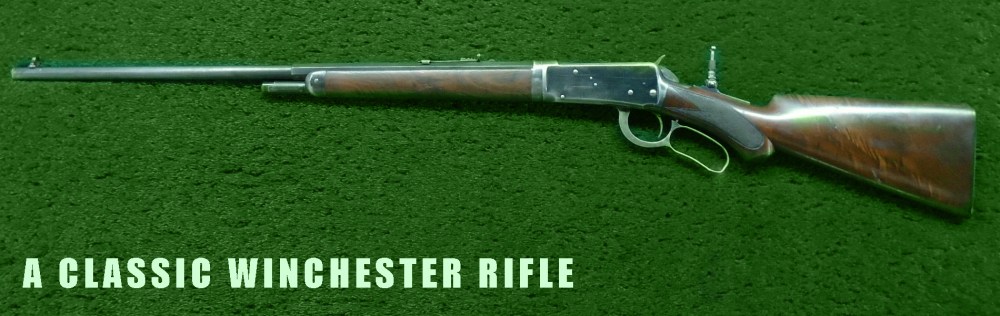
There he saw Thomas lying on his stomach with his right arm extended at right angles to his body. About 2ft from his out stretched arm was a .32 Winchester repeating rifle. Constable Allen said Thomas had a handkerchief tied around his neck and folded diagonally with the flap under his chin.

 Witness said that when he asked Thomas what he was doing under the bridge, Thomas said. ‘I shot a bloke at Lisarow last night He picked a fight with me a month ago and hit me. ‘I had a couple of plonks in me last night and I went to town to see if I could find him. I don’t know his name. I was out of my mind last night after a drink or two of wine.

 I shot him once. This is the rifle’. Thomas allegedly volunteered.

Allen said Thomas told him his name and said -he was 19 on October 26, 1948.

Thomas said ‘I can’t move my legs and I am stiff,I think they are broken.”

 He said he was wearing motor cycle gauntlets so as not to leave fingerprints on the rifle if he dropped it. Witness said, ‘What is the handkerchief around your neck for?’

Thomas replied, ‘I was using it or a mask’.

 Coroner: ‘Did you ask him how he came to be under the viaduct?’

Allen: ‘No’

Coroner: ‘Apparently no one asked him’.

Sgt E. A. Albury (Gosford) corroborated Constable Allen’s evidence.

  Ralph Anthony Walker, railway fettler stationed at Mount Colah, said that he lived with Thomas in a railway camp at Ourimbah at ‘the time of the shooting.

Between 8 pm and 10 pm on November 25, said Walker, he saw Thomas appearing to fix up his rifle and putting shells in it.

 Thomas went out at 10.50 pm and he went to sleep, said Walker. Walker said he was awakened next morning by a police officer. They went to Thomas’s tent, but he was missing.

Walker said he had been talking to Thomas between 6 and 7 pm. Thomas was then ‘perfectly sober’, said Walker.

 To Mr P. W. Vizzard (Public Defender’ for Thomas, Walker said that Thomas went out frequently at night for rabbits. He had brought some home, he said.

 Detective Sergeant George James Barnes, No. 1 Division of the Criminal Investigation Branch, said that he took possession of Thomas’s clothing at the Royal Prince Alfred Hospital, Camperdown on November 26, at 4 pm. He told Thomas he wanted to ask him some questions and Thomas said he would help all he could.

 Thomas said: ‘Where is the other chap now?’

Detective Barnes said he told him Pryor was in the Mater Hospital with a bullet wound in the stomach. Thomas then said to him: ‘I am sorry about that. I am sorry I shot him’.

 When questioned, Thomas said, ‘I had a row with him at a dance some months ago and I went to his house to get square. I hope he gets all right!’

 On January 27, Barnes said, he told Thomas he was to be charged with the murder of Pryor, who died on December 1. When he asked him if he wanted to say anything Thomas said. ‘I can’t remember anything’.

Barnes said he told Thomas that the bail magistrate -Mr McMullen, JP- would be there in a few minutes and he intended  to ask him for a remand until February 23, the date of the coronial inquiry.

 Thomas replied: ‘I will not be there. I can’t walk’. Witness said he told him that the doctors said he was fit enough to attend and that he would be taken to court on a stretcher.

 When charged he again said he could not remember anything about it and burst into tears.

Detective Constable Leslie Arthur Monk, of North Sydney, said that on November 26 at 7.20 am he saw- Pryor being wheeled on a hospital trolley to the operating theatre. A nurse was giving him a blood transfusion.

 Pryor told him he understood that he might die and Monk asked him questions.

Monk said: ‘Thomas stated he I had an argument with you some months ago and he was going  to get even with you’. Pryor replied: ‘No, that is !not right. I do not know him I at all, I have not quarrelled with anyone’.

 Coroner : ‘Robert Matthew Thomas may give evidence if he desires. Mr Vizzard: ‘He does not wish to give evidence. On my advice he declines to answer any questions which may incriminate him. I have no evidence to offer’.

Coroner: ‘This inquiry is to ascertain how, when, where and by what means Bruce Maitland Pryor met his death. ‘It is clear that he received this bullet wound at Lisarow on November 25 and that he died in the Mater Misericordiae Hospital on December 1.

 ‘There is the evidence of the Government Medical Officer, Dr Percy, and Dr Joseph, superintendent of the hospital. They state that the cause of death was a bullet wound in the abdomen.

‘On the evidence before me there is only one finding I can come to, that the deceased met his death from a bullet wound inflicted by Thomas’.
 vase

And two years later Glays married someone else.

17 October 1950

Cessnock Eagle and Maitland Recorder

Wedding

CARR-PECK

A very pretty wedding took place at St, John’s Church of England, Cessnock, between Gladys May, daughter of Mr. and Mrs. Peck of Gosford, to Andrew, second youngest of Mrs. E. Carr and: the late Mr. A. Carr of Cessnock on September 30.

The bride entered the church on the. arm of her father. She was frocked in a satin dress trimmed with lace bodice /peplums and panels on skirt and train. She was attended , by Mrs. Nell Carr as Matron of Honour, and Miss Betty Grant arc bridesmaids. Their frocks were lace over taffeta in apple green and rose pink respectively, with matching picture hats.

The groom was attended by Mr. Carr’s best man and Mr. Allan Peck was the groomsman.

The bride wore a blue crepe beaded velvet the guests at the South Cessnock Hall, where a lovely supper was served. Dancing and singing went on till 10’o’clock when the happy, couple left. for Katoomba, where the honey moon was spent.

headstone

Frederick Cox

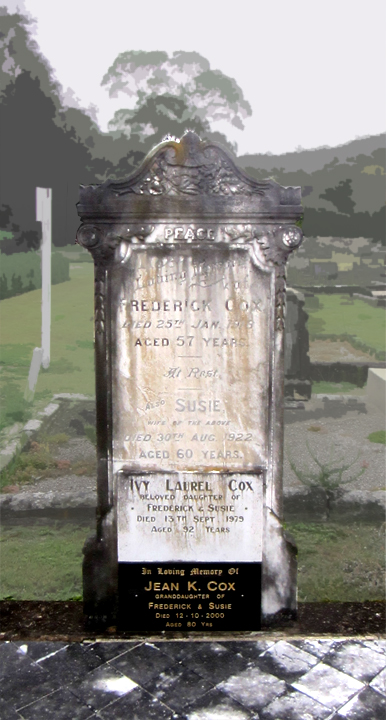
Fred Cox Methodist Section 1 Row 1 Plot 1

map

First Burial at Point Clare Cemetery 1916 and Auctioneer and Trader Extraordinaire 

Methodist Section 1 Row 1 plot 1

Frederick Cox arrived in 1909 and bought a pre existing business from William Burns. It was a mixed business with branches in Gosford and Woy Woy. He traded in some land deals and was a licensed Auctioneer.

In 1911 we have Fred Cox proposing land sites with the council for a new cemetery. He was the President of the Progress Association and was one of the stronger voices of opposition when another proposed site on Presidents Hill was put forward.

15th September, 1911

New Cemetery Sites.

Mr. T W Connelly, District Surveyor, visited Gosford on Tuesday last and, accompanied by Mr. F. Cox, President of the Progress Association, inspected two proposed sites for the new cemetery, both  situated on the western side of Narara Creek — one on Crown land, and the other on land the property of Mr Fagan. We understand that Mr. Connelly favoured the latter site, and intends sending an officer to make further inquiries.

1915 funer scene

29 September 1911

Proposed New Cemetery For Gosford.

For a considerable time there has been a growing dissatisfaction with the site of the present cemetery, owing to the lower portion being so swampy that people object to burying their relatives and friends in graves that fill with water as soon as they are dug, with the result that the dryer portion, known as the general portion, is mostly used, and will in a few years become crowded. During last year the District Surveyor, Mr. T. W. Conolly, paid a visit to the cemetery at the invitation of some of the residents, and at once decided that something should be done in the  way of securing a fresh site and closing the present one.

He recommended a position on the western slope of President’s Hill suitable as to dryness and elevation, but strongly objected to by the townspeople, for the reason that the locality was too valuable for residential purposes and was within the population area. The Progress Association then offered to submit to Mr. Conolly several sites more suitable for the purpose, and recommendations were accordingly made of several areas which were inspected by the Surveyor, the best in his opinion being selected, and the Assistant Surveyor sent to test the site for depth of soil and drainage. The Secretary of the Progress Association, Mr. W. E. Kirkness, is now in receipt of a letter from the District Surveyor, requesting that the public be asked to signify their approval or rejection of the proposed site, which is about 24 acres in area, being Government Subdivision Nos. 133, 134 and 142, adjoining Messrs. Fagan’s property on Cooranbene Creek, West Gosford.

Little did Fred Cox know that he would be the first to buried at Point Clare Cemetery in January 1916. There is a stone in the Catholic Section, RC 1,1,1 that mentions a death in 1915 (Cecil Morris at the battle of Lone Pine) but there was no body buried in that Grave at that time.

cox 2

25th January 1917

IN MEMORIAM.

COX. — In loving remembrance of our dear father, Frederick Cox, who died January 25th, 1916. Inserted by his loving sons, Gunner R. K. Cox and Driver C. A. Cox, A.I.F.

cox

31 August 1922

MRS COX

OBITUARY.

MRS. FREDERICK COX

The community of Gosford were deeply Shocked on learning yesterday that Mrs. Susie Cox, relict of the late Mr. Frederick Cox, had passed away at her home, ‘Cora Lynn,’ East Gosford, about 9 a.m. The deceased lady complained of not feeling well last I Sunday, and later on Dr. Paul was called in unexpectedy — caused her relatives anxiety, serious symptoms being manifest, and, despite all that could be done by medical skill and expert nursing, she passed away* as above stated, at 9 o ‘clock on Wednesday morning, the cause of death owing to heart failure.

The late Mrs. Cox, who was 60 years of age, was a native of Kelso, Singleton, a daughter of Mr. and Mrs. Henry Bailey, one of the district ‘s best known families. Mr. Bailey died some years ago, but Mrs. Bailey still resides at Dunolly, Singleton, in her 80th year. Miss Bailey married Mr. Frederick Cox at Singleton, and her husband passed away at Gosford in January, 1916, his death being a great loss to residents of town and district. The late Mr. Cox was a splendid townsman, and his memory will be treasured by relatives and friends for many years to come. Mr. and Mrs. Cox came to Gosford about 15 years ago.
Mr. Cox purchasing the storekeeping business then carried on, by Mr. William Burns. Some years later, Mr. Cox retired from active business life, and built a beautiful home, ‘Cora Lynn,’ at East Gosford. During the war period Mrs. Cox and her daughter, Miss Ivy Cox, took a prominent part in Red Cross work, and many a kindly and unostentatious deed stands to the memory of a kind arid charitable woman. Two of her sons served in the big war, and returned after the Armistice had been signed. Of the marriage there were three sons and one ‘daughter, all of whom survive their  parents — Messrs Milton Cox (Parkes), Ray Cox (Gosford), Clare Cox (Sydney), and Miss Ivy Cox (Gosford). To them we offer our deepest sympathy in their irreparable loss, the funeral takes place this afternoon, in Point Clare cemetery, where the remains of Mr. *Cox were laid to rest some years ago.

hearse

overgrown 1